

Introduction
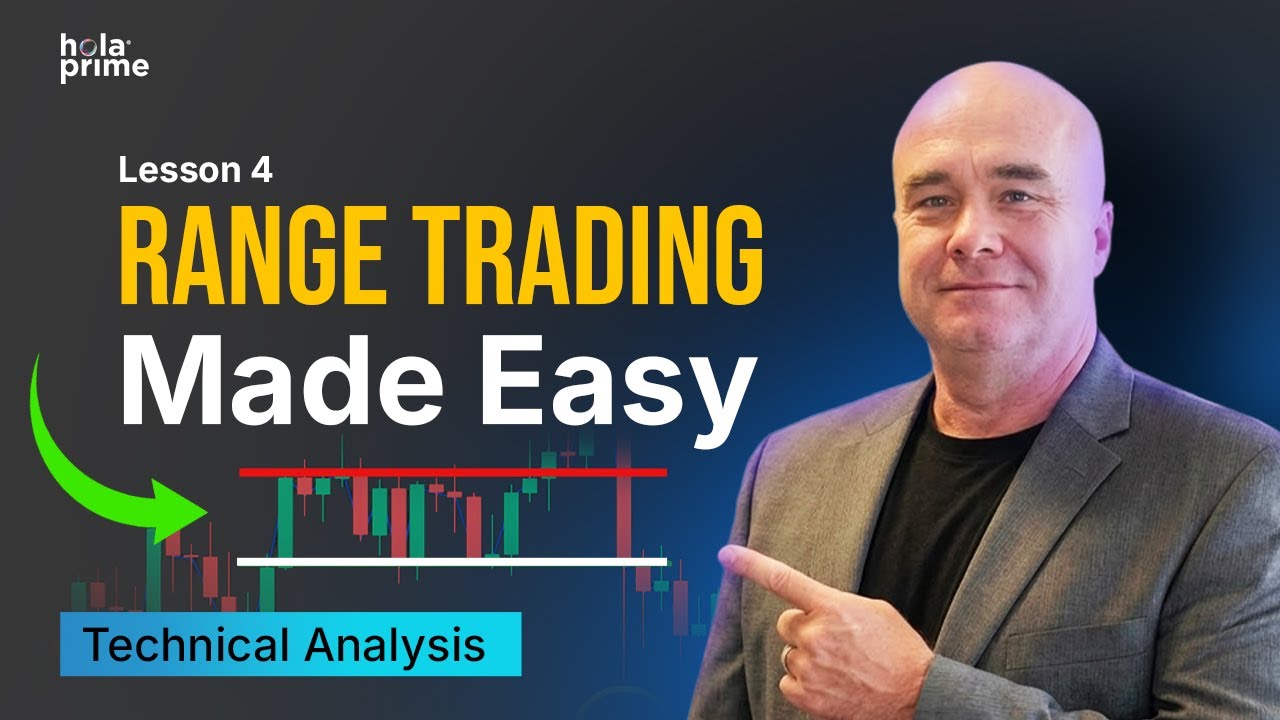
Markets do not move in one direction forever. Even in strong trends, assets frequently enter periods of consolidation, where price bounces between two defined levels. This sideways action can be caused by profit-taking, upcoming fundamental news like non-farm payroll (NFP) reports, or seasonally low liquidity. This lesson explores a systematic approach to trading range-bound markets using the stochastic oscillator and moving averages.
Understanding Consolidation
Consolidation occurs when a market repeats a cycle of moving from one level to another.
-
Market Debate: It represents a debate among participants about whether the asset's value should continue higher or lower.
-
Common Timings: Sideways action is frequent during the Asian and early European sessions before a major US economic announcement.
-
Seasonality: Periods between major holidays, such as Christmas and New Year's, often exhibit consolidation due to lack of market participants.
Identifying a Sideways Market: The 50-Day EMA
A key guideline for identifying consolidation is the behavior of moving averages.
-
The Guideline: On a daily or 4-hour chart, look at the 50-day Exponential Moving Average (EMA).
-
Visual Cue: When the 50-day EMA appears flat or listless, it is a strong indication that the market is currently range-bound.
-
Real-World Example: In the Euro/USD pair during 2024, a flat 50-day EMA confirmed a 600-pip range between 1.05 and 1.11.
The Stochastic Oscillator: Identifying Extremes
The Stochastic Oscillator is a momentum indicator specifically designed to identify overbought or oversold conditions within a consolidation.
-
Overbought (Sell Signal): When the stochastic lines move above the 80 level, cross each other, and start to drop, it suggests the market is exhausted at the top of the range.
-
Oversold (Buy Signal): When the lines move below the 20 level, cross, and start heading higher, it indicates the momentum is swinging back to the upside.
-
Caution: Stochastics do not work well in strong trending environments, as they can stay at extremes while price continues to move.
Trading Strategy: Combining EMA, Levels, and Stochastics
To trade sideways markets with confidence, you must look for three converging signals:
-
Flat Moving Average: Confirms the lack of a strong trend.
-
Major Support or Resistance: Ensure the price is at a significant historical level at the top or bottom of the range (e.g., 1.3750 in USD/CAD).
-
Stochastic Crossover: Use the crossover above 80 or below 20 as your "tertiary" reason to enter the trade.
Managing Expectations: The Probability of Success
Consolidation will eventually break, and no signal is 100% accurate.
-
Win/Loss Ratio: In a healthy range, you may achieve four or five wins before taking a loss when the breakout finally occurs.
-
Risk Management: Losses in sideways markets are typically small (e.g., 20 pips) compared to the gains from multiple successful range trades.
-
Profitability: Winning five trades and losing one with consistent risk management is a clear path to long-term profitability.
























.png)
.png)
.png)
.png)
.png)
.png)