

Introduction
While reversal patterns help you catch the very beginning of a new trend, continuation patterns allow you to enter a trade safely once a trend is already established. In a strong market, prices do not move up in a straight line; they move in "waves." Continuation patterns represent the brief pauses or consolidation phases where the market "takes a breath" before resuming its prior direction. Mastering these patterns is essential for any trader who wants to join a trend mid-way without chasing the price at its peak.
The Anatomy of a Bull Flag
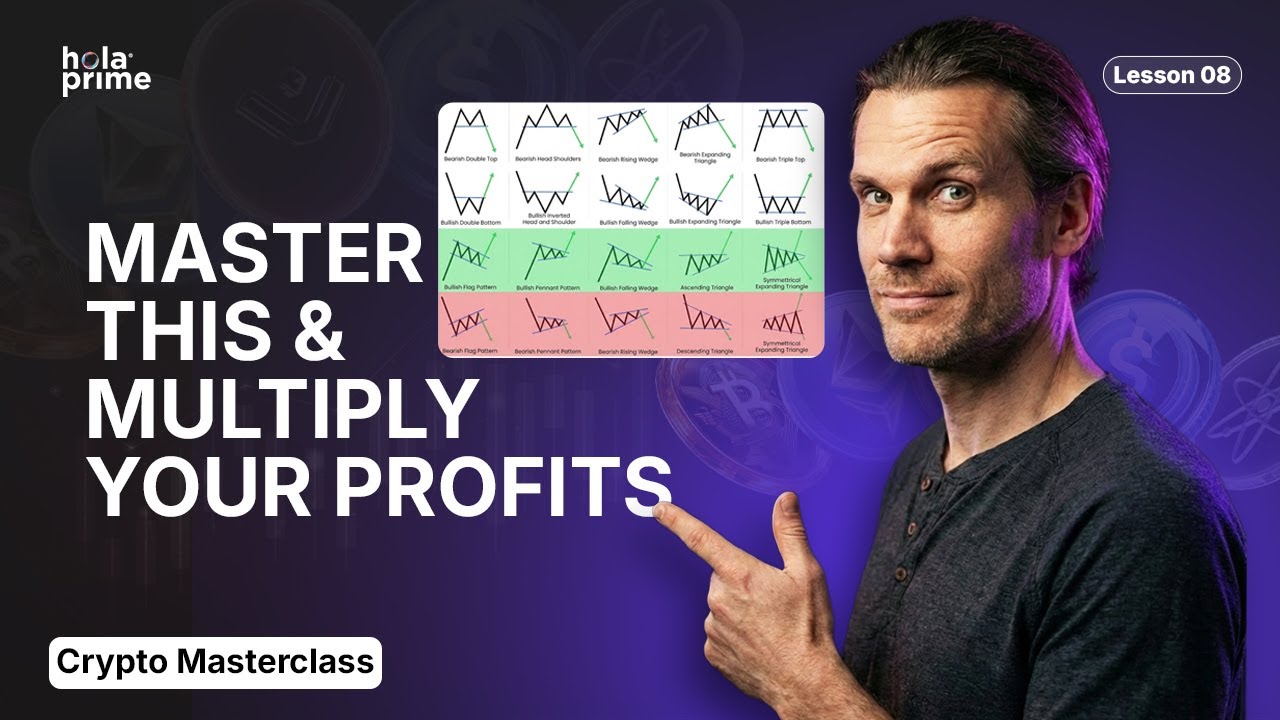
The most recognized continuation pattern is the Bull Flag. It visually resembles a flag on a pole.
-
The Flagpole: A sharp, vertical move upward driven by strong buying momentum.
-
The Flag: A brief period of consolidation where the price moves slightly downward or sideways within a tight range.
-
Characteristics: A legitimate bull flag should have orderly price action, featuring a series of lower lows and lower highs. Crucially, this consolidation should be accompanied by low volume, indicating that sellers are not in control and the downward move is just temporary profit-taking.
Identifying Varieties: Wedges and Pennants
While the bull flag is the "gold standard," continuation patterns come in several similar forms:
-
Falling Wedge: Similar to a flag but the trend lines converge, narrowing the price range as it moves down.
-
Bull Pennant: A small symmetrical triangle that forms after a sharp move up.
-
Ascending Triangle: A flat top of resistance with a rising line of support.
Despite their visual differences, all of these patterns signal the same thing: the coin is temporarily overbought, and once the pullback is complete, it is likely to resume its upward momentum.
Entry Strategies and Confirmation
The strategy for trading these patterns is a classic "Buy the Breakout" approach. You identify the upper trend line of the flag or wedge and wait for a candle body to close above it. This closure confirms that the consolidation phase has ended and the bulls have regained control. Entering at this point provides a clear area to set a stop-loss (usually just below the bottom of the flag), offering a high-probability trade with managed risk.
Active Trading vs. Holding (HODLing)
One of the greatest advantages of trading continuation patterns is the ability to maximize profits while minimizing "time at risk." If you simply buy and hold an asset, you are forced to sit through every pullback and consolidation phase, during which the price could potentially roll over and erase your gains. By trading the individual "legs" of the move—buying the breakout of one flag, selling at the next peak, and waiting for a new flag—you can actually exceed the total profit of a "buy and hold" investor. This is because you are only exposed to the market during its most aggressive upward movements.
Trading in a Downtrend: Bear Flags
It is important to remember that these patterns work in both directions. In a bearish market, you look for Bear Flags. These are the inverse of bull flags: a sharp drop (flagpole) followed by a brief move upward or sideways (the flag) before the price breaks to the downside. Learning to recognize these allow you to short the market or exit positions before the next major drop occurs. Whether the market is moving up or down, continuation patterns provide a secure roadmap for navigating a trend.





.png)
.png)
.png)
.png)
.png)
.png)