

Introduction
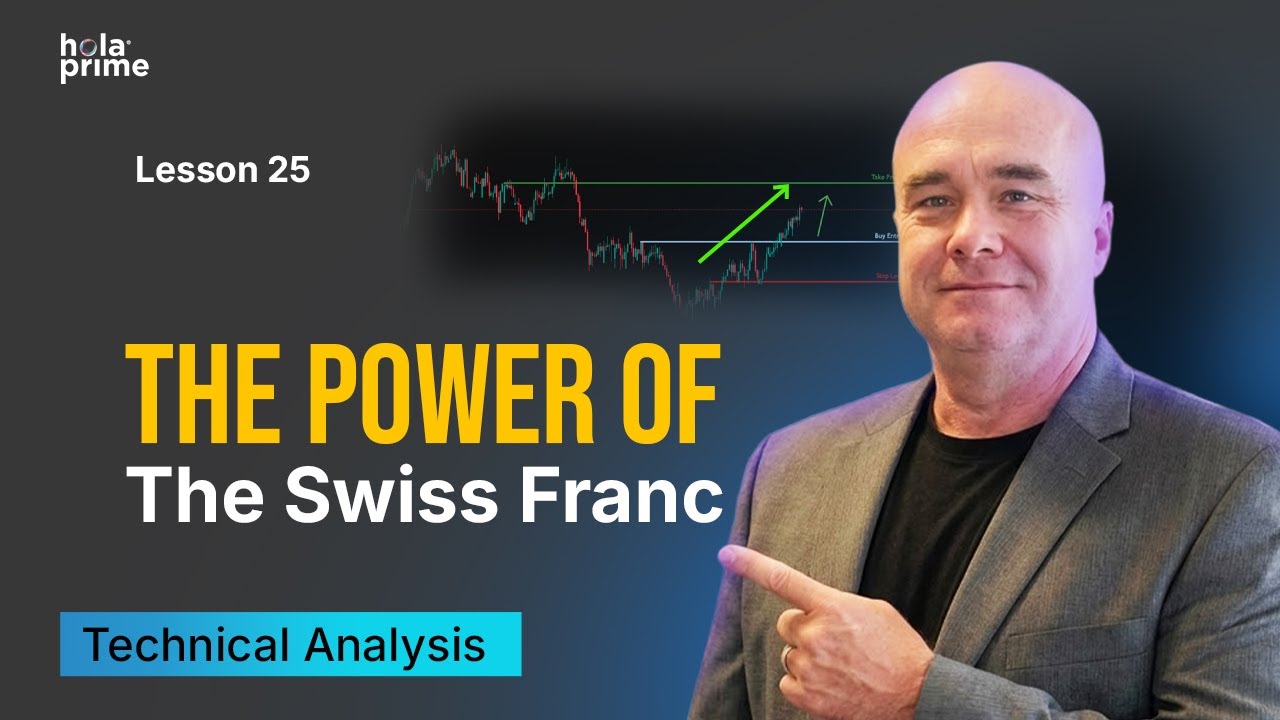
In times of global uncertainty, the Swiss Franc (CHF) often stands out as the ultimate "safe-haven" currency. While other assets may plummet during a crisis, the Franc typically appreciates as investors rush toward Swiss stability and neutrality. This lesson explores why the Swiss Franc behaves this way, its relationship with other safe havens like the Japanese Yen, and how to use volatility indexes like the VIX to time your "risk-off" trades.
The Swiss Franc: The World's Safe Haven
The Swiss Franc's reputation for safety is built on decades of political neutrality, a robust banking system, and a stable national economy.
-
The "Fear Gauge": When geopolitical tensions flare or a global economic slowdown looms, international capital flows toward Switzerland, driving the value of the Franc higher.
-
Long-Term Stability: Unlike many other currencies, the CHF is often viewed as a "store of value" during turbulent market cycles.
Export Economies: The JPY and CHF Connection
Both Switzerland and Japan are considered "export nations," which creates a unique dynamic between their currencies and domestic industries.
-
Competitive Edge: As discussed in previous lessons, a cheaper currency helps export heavyweights (like Sony in Japan or Swiss watchmakers) stay competitive abroad.
-
Flight to Safety: Despite their export-driven nature, both the Japanese Yen (JPY) and the Swiss Franc (CHF) see massive inflows when fear rises, often causing their respective stock markets (Nikkei 225 and SMI) to pull back as their currencies strengthen.
Fear and Market Volatility (The VIX)
To effectively trade safe havens, you must monitor the level of fear in the broad market.
-
VIX Index: Often called the "fear gauge," the VIX measures expected volatility in the S&P 500.
-
The Inverse Correlation: Generally, as the VIX spikes higher, "risk" assets like stocks and carry trade currencies fall, while safe havens like the CHF and JPY rise.
Case Study: The "Risk-Off" Scenario
The video highlights how safe havens respond during sudden market shocks:
-
EUR/CHF Performance: In a typical "risk-on" environment, the Euro might strengthen against the Franc. However, when a crisis hits, the EUR/CHF pair often drops sharply as investors dump the Euro in favor of the Franc's security.
-
JPY/CHF Comparisons: While both are safe havens, their relative performance can vary based on regional news. For example, if the fear is centered on European stability, the Swiss Franc may outperform even the Japanese Yen.
Identifying Trade Setups in Volatile Times
When market conditions turn sour, look for these key indicators:
-
Fundamental Spark: A major geopolitical event or a surprising economic downturn.
-
Volatility Spike: The VIX breaking above its recent range.
-
Technical Trigger: A clear breakout on safe-haven charts, such as a drop in the USD/CHF or EUR/CHF pairs, signaling Franc strength.
Conclusion: Understanding the "flows of fear" allows you to remain calm during volatility and identify the best pairs to trade when the rest of the market is panicking.


.png)
.png)
.png)

.png)
.png)
.png)