

Introduction
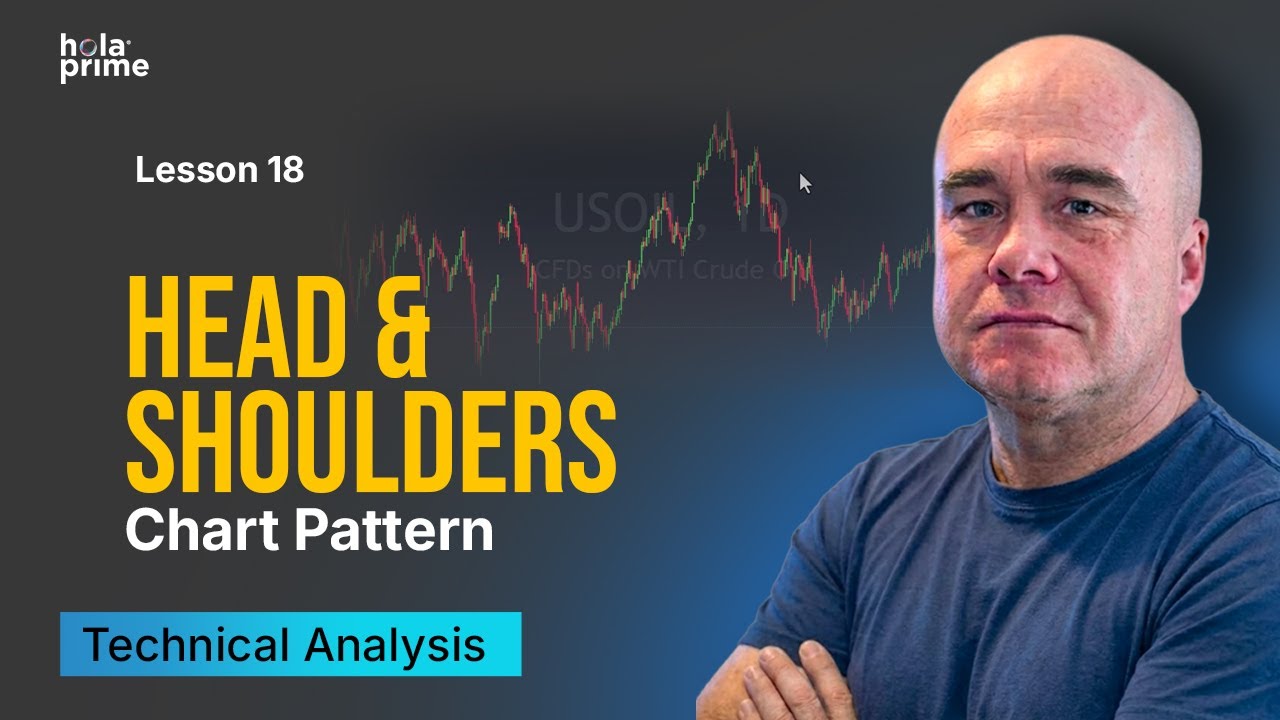
The Head and Shoulders pattern is one of the most widely followed technical indicators for identifying potential market reversals. Its popularity often makes it a self-fulfilling prophecy, as a vast number of traders use it to spot shifts in momentum. This lesson explores the structural logic of the pattern, how to calculate precise profit targets, and the psychological "snowball effect" that occurs when these levels are broken.
Understanding the Head and Shoulders Pattern
The pattern represents a struggle for continuation in an existing trend.
-
Trend Failure: An uptrend is defined by higher highs and higher lows. When the third peak in a series fails to rise as high as the second, the trend's viability is called into question.
-
Psychology: Traders who bought during the formation of the "head" begin losing money once the price breaks lower, forcing them to sell and creating downward momentum.
-
Time Frames: While visible on all time frames, the pattern is generally more reliable on higher time frames because more participants are watching and reacting to the setup.
Identifying the Pattern: Structure and Components
The pattern is named for its visual resemblance to a human torso:
-
Left Shoulder: An initial rally followed by a pullback.
-
Head: A second rally that reaches a higher high than the first shoulder, followed by another pullback.
-
Right Shoulder: A third rally that fails to reach the high of the head, indicating a lack of buying momentum.
-
Neckline: A line created by connecting the two troughs (pullback points) between the shoulders and the head. This line is often slightly tilted rather than perfectly horizontal.
Triggering the Trade: The Neckline and Measuring Stick
The setup is not "active" until specific conditions are met:
-
The Trigger: The trade is initiated only when the price breaks below the neckline after the formation of the second shoulder.
-
Target Calculation: The pattern includes a built-in "measuring stick" for profit targets. Measure the vertical height from the top of the head to the neckline.
-
The Goal: Project that same height downward from the breakout point on the neckline to find your primary target.
Bullish vs. Bearish Variations
The pattern can signal reversals for both upward and downward trends:
-
Standard Head and Shoulders: Occurs at the top of an uptrend and signals a bearish reversal.
-
Inverted Head and Shoulders: An upside-down version that occurs at the bottom of a downtrend, signaling a bullish reversal.
Real-World Case Studies
The video provides three distinct examples of the pattern in action:
-
Forex (USD/CAD 4-Hour): A head and shoulders formed with a neckline at 1.38. The measured move predicted a target of 1.3650, which was successfully hit after the breakout.
-
Indices (FTSE 100 Daily): An inverted head and shoulders took two months to form. Once the neckline above 7,060 was broken, it fulfilled a measured move target at 7,490.
-
Commodities (US Oil Daily): A massive head and shoulders formed between July and October 2023. Shorting the breakdown at $84 led to a $14-per-barrel gain, perfectly hitting the target at $69.80.
Risk Management and Statistical Edge
The structure of the pattern naturally enforces disciplined risk-to-reward ratios:
-
Stop-Loss Placement: Typically, the stop-loss is placed on the other side of the final shoulder.
-
Statistical Advantage: By design, the profit target (height of the head) is usually much larger than the risk (height of the shoulder), giving the trader a clear statistical edge over time.


.png)
.png)
.png)

.png)
.png)
.png)