

Introduction
One of the biggest mistakes retail traders make is believing that central bank rates (like those set by the Federal Reserve) are the only interest rates that matter. In reality, the bond market sets the actual daily market rates, and these yields are the true drivers of currency strength. Money naturally flows to where it is treated best—meaning investors seek out countries offering the highest yields. This lesson explores how to monitor bond yields to solve the "puzzle" of forex directionality.
The Bond Market vs. Central Bank Rates
While a central bank might set a target rate (e.g., 4.25%), the market-driven interest rate fluctuates constantly in the bond market.
-
Market Revolt: Even if a central bank cuts rates, the bond market can "revolt," causing yields to rise if investors expect future inflation or risk.
-
Real-Time Data: Because bond markets trade throughout the day, they provide a more current and sensitive indicator of currency value than infrequent central bank meetings.
How Higher Yields Attract Global Capital
Foreign exchange is heavily influenced by international capital flows seeking the best returns.
-
Investor Logic: If a Japanese investor sees that US interest rates are 4% higher than rates in Japan, they will likely send their capital to the US.
-
Currency Demand: To buy US bonds, that investor must first buy US Dollars. This massive demand for the currency drives its value higher against the Japanese Yen.
Positive Correlation: Bond Yields and Currency Indexes
There is a strong positive correlation between a country's bond yields and its broad currency strength.
-
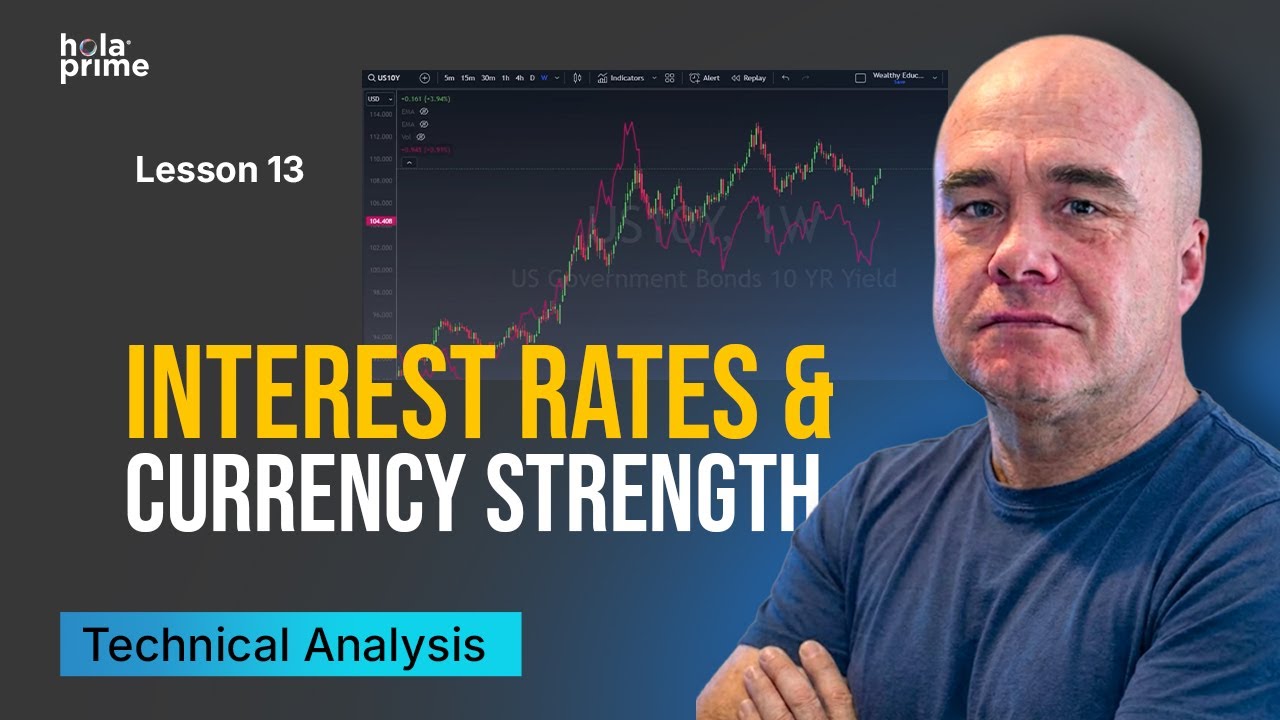
US Example: As the 10-year US yield rose from 3.67% to 4.26%, the US Dollar Index (DXY) simultaneously rallied from 100 to 104.
-
Measuring Strength: You can use "currency indexes" (like DXY, EXY for Euro, or BXY for Pound) on platforms like TradingView to see how yields impact the overall currency against a basket of peers.
Identifying Yield Influences
Every major currency is anchored to its respective bond market:
-
US Dollar: Primarily influenced by the US 10-year Treasury yield.
-
Euro: Heavily influenced by the German 10-year Bund yield and, to a secondary degree, French yields.
-
British Pound: Driven by the UK bond market, specifically Gilts.
-
Commodity Currencies: Canada, Australia, and New Zealand also have active bond markets that dictate the daily movement of their respective dollars.
Using Yield Spreads to Predict Currency Pairs
The most effective way to use this information is by comparing the yields of two different countries.
-
Yield Differentials: If yields in Country A are rising while yields in Country B are falling, Currency A will typically rise against Currency B.
-
The Full Picture: While yields are a critical "puzzle piece," you must also consider external factors like geopolitics or global economic slowdowns, which can occasionally disrupt these correlations.
-
Long-Term Utility: Over the long term and on a day-to-day basis, following the money toward higher yields remains one of the most reliable fundamental strategies in forex.



.png)
.png)
.png)

.png)
.png)
.png)