

Introduction
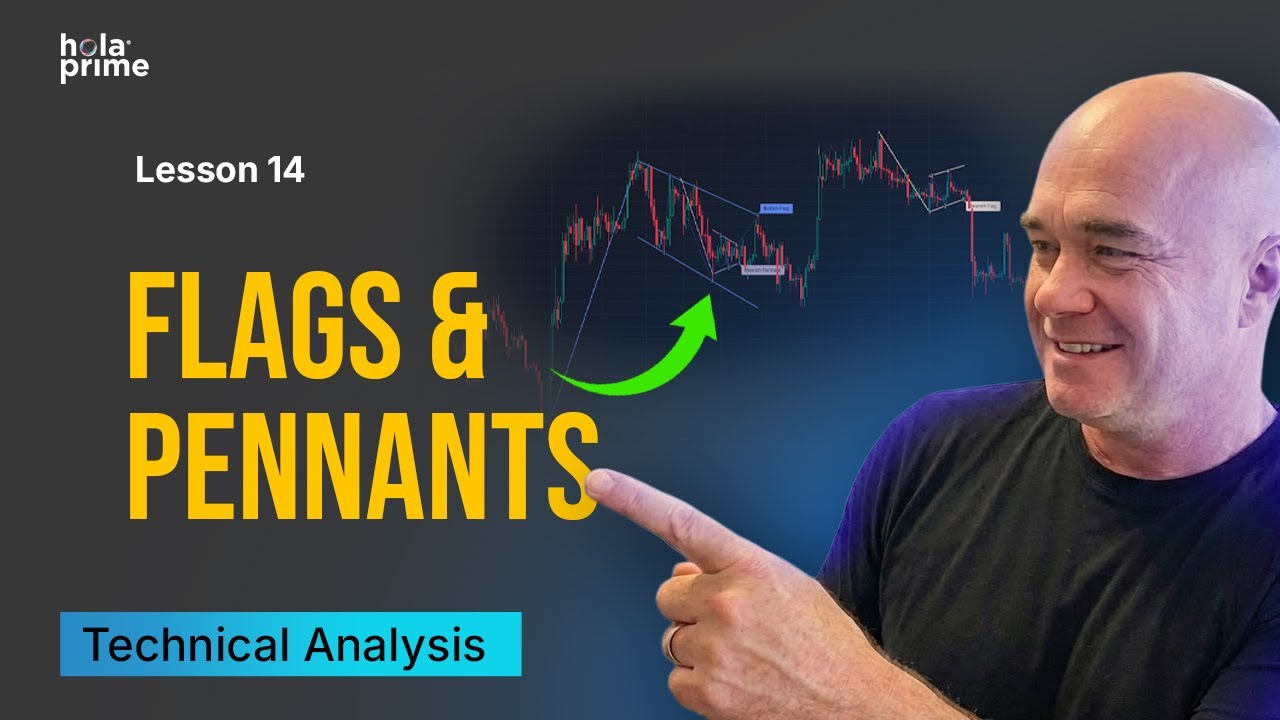
Flags and pennants are among the most popular technical analysis patterns because they signal a continuation of an existing trend. Both patterns represent a brief pause or "breather" the market takes after a strong, impulsive move before resuming its original direction. While some traders distinguish between the two based on their shape, they provide the same information and follow nearly identical trading rules. This lesson explores how to identify these patterns and use them to catch large trending moves with precise risk management.
Defining Flags and Pennants
At their core, these patterns consist of three phases: a run in one direction, a period of consolidation, and a final continuation move.
-
Bullish Flag/Pennant: Indicates the market is likely to head higher after a brief consolidation.
-
Bearish Flag/Pennant: Indicates the market is likely to continue lower after a short pause.
The Anatomy of a Flag: Pole and Channel
A flag is recognized by its distinct "pole and flag" appearance:
-
The Pole: This is the initial, sharp impulsive move (either up or down).
-
The Flag (Channel): This is the consolidation phase, which usually forms a slightly sloping rectangular channel that moves against the direction of the pole. For example, a bullish flag will have a pole pointing up and a small channel sloping slightly downward.
Measuring the Move: Target Setting
One of the greatest advantages of trading flags is that they provide a built-in measuring device for profit targets.
-
The Measured Move: The length of the initial "pole" is used to project the next move. Once the price breaks out of the flag, traders aim for a continuation move that is approximately the same size as the original pole.
-
Pro Tip: It is not uncommon for a move to extend beyond the measured target. Some traders take half of their profits at the measured move and move their stop-loss to break-even to catch any further gains.
Protecting Your Capital: Stop-Loss Rules
To stay safe in random market conditions, you must know where your trade idea is wrong.
-
The Signal: Wait for the price to break and preferably close (on a daily or hourly candle) above the top trendline of a bullish flag or below the bottom of a bearish flag.
-
Standard Stop-Loss: Place your stop-loss on the opposite side of the flag consolidation area.
-
Aggressive Stop-Loss: For more risk-averse traders, the stop-loss can be placed in the middle of the flag channel.
Pennants: The Triangular Alternative
A pennant is essentially a flag that consolidates into a small triangle rather than a rectangular channel.
-
Shape: Instead of parallel lines, the consolidation lines converge toward each other.
-
Rules: Pennants follow the exact same rules as flags for measuring targets and placing stop-losses.
Best Practices and Common Pitfalls
-
Avoid Sideways Markets: Flags and pennants are trend-continuation patterns. Be cautious of trading them in markets that have been obviously moving sideways for a long time, as they are less reliable in those conditions.
-
Pattern Proportions: A valid flag should look like a flag; the consolidation area should not be longer than the pole itself.
-
Time Frames: These patterns work best on daily, 1-hour, or 15-minute charts. They are generally avoided on 1-minute or 5-minute charts due to increased market "noise".
-
Exotic Currencies: When trading exotics (like USD/ZAR), stick to higher time frames to avoid liquidity issues that can distort the pattern.
.png)
.png)
.png)
.png)
.png)
.png)