If you look at the traders who stay consistent year after year, there is usually one common thing that sets them apart. They do not trade based on random ideas or emotions. They make decisions on data that gives them confidence and direction. A data-driven trading workflow helps you remove guesswork, track what works, and improve your strategy with evidence instead of hope. When you build this kind of workflow, you do not panic when a trade goes wrong, and you do not feel lost when the market environment changes. You have numbers and insights guiding every step. In this guide, we will walk through how you can build your own data-driven system, the tools you can use, and the habits that will help you grow as a trader.
Why Data Matters in Modern Trading
Trading has become faster, more competitive, and more influenced by technology. Retail traders who only rely on gut feeling or rumors usually get left behind. Data helps you understand what is happening in the market and how your strategy performs in different conditions. Instead of thinking a setup is strong, you know the probability behind it. Instead of hoping for profit, you track whether you have a real edge. Data turns trading into a repeatable process that you refine over time.
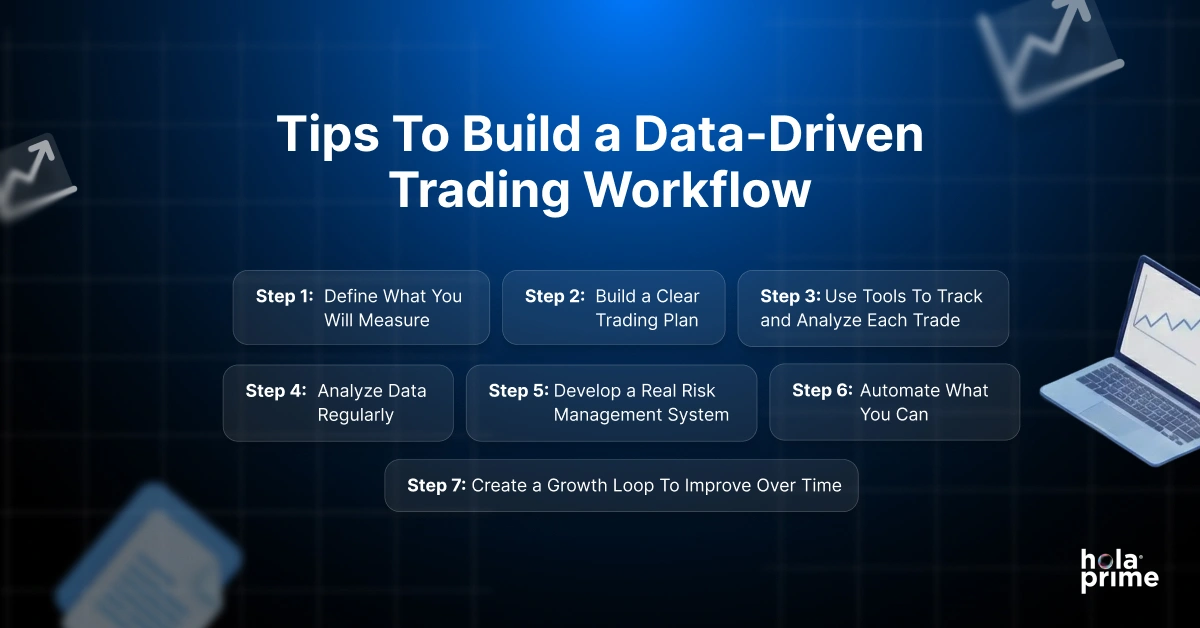
Step 1: Define What You Will Measure
What performance metrics matter
You want to track numbers that help you understand both risk and skill. Important ones include win rate, average reward to risk, maximum drawdown, profit factor, and expectancy. These show whether your strategy has a real advantage or just occasional lucky trades.
Track behavior as much as results
Performance is not only about profit. You should also track behavior such as whether you followed your plan, whether you respected stop loss levels, and whether emotions influenced decision-making. The goal is to improve execution along with profits.
Focus only on useful data
If you collect too much information, it becomes noise. Start with the key metrics that actually drive improvement, and then expand once your workflow becomes comfortable.
Step 2: Build a Clear Trading Plan
Define your setups
Write down what a valid trade looks like. Include entry rules, time of day, position sizing, and exit conditions. When everything is clear, you avoid random decisions.
Know when to trade and when to stay out
Market conditions change. A trending strategy does not do well in a choppy environment. A data-backed workflow shows when your plan performs best so you can avoid low-quality times.
Make it simple to follow
Plans work only if you can execute them under stress. Keep your rules clear and easy to review quickly before entering any trade.
Step 3: Use Tools to Track and Analyze Each Trade
Trading journal tools
You can record your trades manually or use platforms that capture your entries and exits automatically. A journal helps you see patterns that you may not notice day to day.
Chart analytics and screenshots
Adding a screenshot of the chart where you entered helps you review your behavior later. You can clearly see whether the setup matched your plan.
Tag and categorize your trades
Tagging lets you filter by specific conditions. You will discover which setups perform the best and which ones cause the most losses. This helps you shift focus toward high-edge opportunities.
Step 4: Analyze Data Regularly
Weekly reviews
End each week by going through your trades as a group. Look for themes like late entries, oversized positions or trading outside plan hours. Small improvements made every week bring major long-term growth.
Monthly performance deep dives
A monthly review tells you whether your strategy is improving or if something in the market has changed. You can adjust rules, tighten risk, or refine targets based on the data you see.
Measure change, not perfection
Data-driven traders do not try to win every trade. They try to keep improving the overall system. Growth is what matters most.
Step 5: Develop a Real Risk Management System
Position sizing rules
Decide how much you will risk per trade. Many traders risk a small percentage of their account so losses stay manageable. When sizing is consistent, results become more predictable.
Protect yourself during volatility
Some market events can create big moves and wider spreads. If your journal shows poor performance during news releases, your workflow can include staying out during those times.
Review worst-case outcomes
It may feel uncomfortable, but checking your largest losing streak helps you prepare mentally. Data removes fear of the unknown.
Step 6: Automate What You Can
Alerts and watchlists
You can set alerts for your setups so you are not staring at charts all day. This protects your energy and ensures you react only to valid opportunities.
Use spreadsheets or analysis software
Automation handles calculations and sorting, freeing your mind to focus on decisions. The less manual work, the fewer mistakes.
Keep the human judgment
Even with automation, you remain the decision maker. Data guides you but does not replace your awareness of market context.
Step 7: Create a Growth Loop to Improve Over Time
Test new ideas with data
When you want to change something, run a backtest or trial before fully applying it. This helps you avoid switching strategies too often.
Track improvements over months
You can look at how your metrics move over time. If drawdowns shrink and expectancy rises, you know you are on the right path.
Celebrate small wins
Consistency comes from building good habits daily. Recognizing each improvement helps you stay motivated.
Common Mistakes Traders Make When Using Data
Collecting too much information
Too many numbers cause confusion and slow decisions. Start small. Expand only when the workflow is smooth.
Ignoring the emotional side
You can have a strong strategy and still lose if you cannot follow it. Track discipline and mindset alongside technical metrics.
Changing the plan too often
It is easy to get distracted by results over a short time period. You must give yourself ample amount of time and sample size before you make any changes to your strategy.
How a Data-Driven Workflow Changes Your Trading Mindset
Traders who utilise a data-driven workflow have a different perspective on the market. They view it as many different trades across multiple time frames and thus, the success or failure of one trade does not dictate the success or failure of their trading plan. This mindset creates a less stressful trading environment when going through drawdowns because they are aware of their superior edge that can be achieved over the long term through the use of data-driven methods and decision-making. This mindset allows traders to make better decisions and create a more sustainable growth plan through consistent execution of their established processes, rather than responding to every small movement (candle) with emotion.


 EN
EN DE
DE