

Introduction
In this guide from Hola Prime, we’ll look at why many traders breach their daily loss limits (3% or 5%, depending on the challenge) and how to prevent it. The main mistake is trading without a stop-loss. We’ll explain how stop-loss orders protect you, how to use them with correct position sizing, and common mistakes to avoid.
1. Understanding Daily Loss Limits
-
1-Step Prime Challenge: 3% maximum daily loss.
-
2-Step Prime Challenge: 5% maximum daily loss.
-
If you exceed this limit, you fail the challenge and must restart.
2. Why Trading Without a Stop-Loss is Risky
-
A stop-loss caps the maximum amount you can lose on a single trade.
-
Without it, sudden news events or spikes can wipe out 3–5% of your account in one move.
-
Just one wrong trade without a stop-loss can end your challenge.
3. How Stop-Loss Orders Work
-
A stop-loss is set above or below your entry price, depending on trade direction.
-
It automatically closes the trade once price reaches the level, protecting you from larger losses.
-
The distance between entry and stop-loss determines how much you risk.
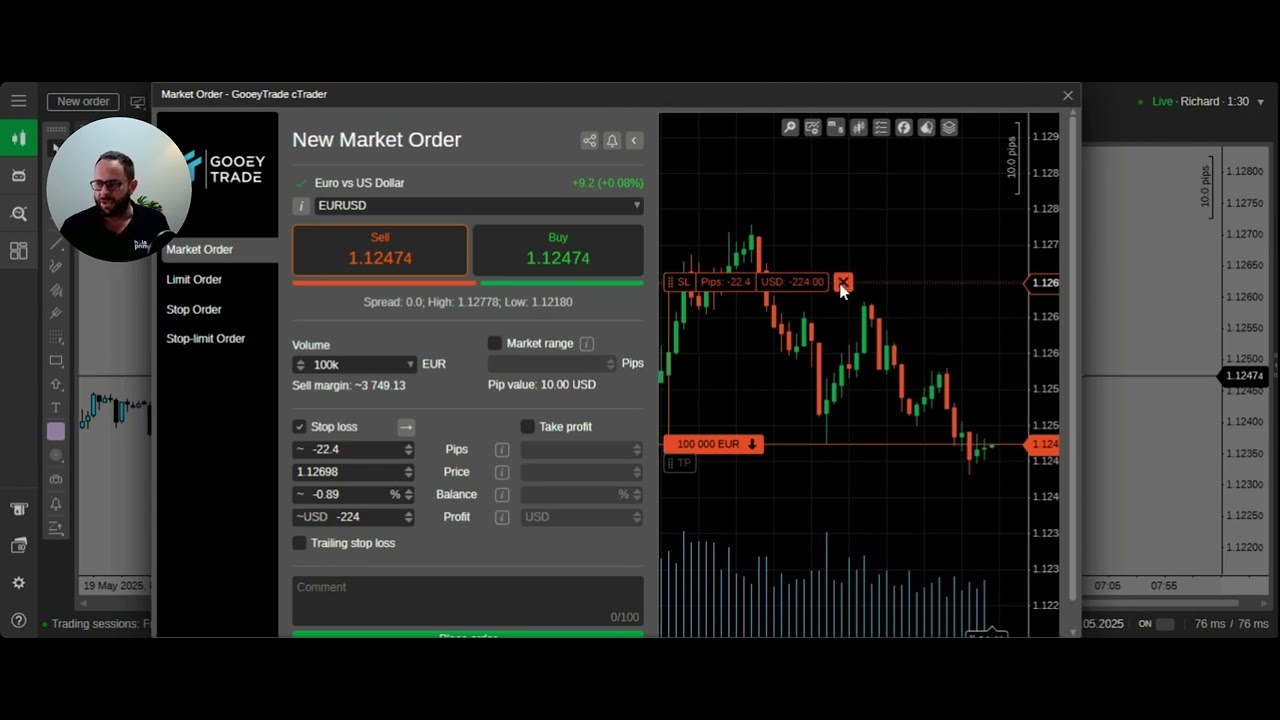
4. Position Sizing with Stop-Loss on cTrader
Lot Size and Volume Explained
-
On cTrader, Volume = Lot Size.
-
Example: 100,000 volume = 1 lot in EUR/USD.
-
Higher lot size = bigger gains and bigger losses.
Example: $25,000 Account with 1% Risk
-
Maximum risk per trade: $250 (1% of $25k).
-
Trade with 100,000 volume and a standard stop-loss = potential loss of ~$228 (almost 1%).
-
If the stop-loss is wider or not set, loss can quickly exceed 2–3% in one trade.
👉 Adjust your volume (lot size) until the potential loss matches your planned risk (e.g., 1%).
5. Common Mistakes with Stop-Losses
-
Not using a stop-loss: Leads to uncontrolled risk.
-
Moving stop-loss further away: Increases risk and defeats its purpose.
-
Risking too much per trade: If you feel uncomfortable, your position size is too large.
6. Key Rules for Safer Trading
-
Always use a stop-loss.
-
Risk 0.5–1% per trade to protect capital.
-
Adjust lot size to match your chosen risk and stop-loss distance.
-
Never widen your stop-loss once in a trade.
-
Accept that losing trades are part of trading; risk management keeps you in the game.
7. Conclusion
Stop-loss orders are the foundation of effective risk management. Without them, one bad trade can breach your daily loss limit and end your challenge. By combining stop-loss discipline with proper position sizing, you control risk and give yourself the best chance of success.
-
Know your loss limits.
-
Always use a stop-loss.
-
Adjust lot size to keep risk small and consistent.
With these habits, you’ll avoid common beginner mistakes and trade with more confidence.
.png)
.png)
.png)
.png)
.png)
.png)