Overtrading is one of the most common reasons prop traders fail. Not because they lack strategy, but because they trade too much, too often, and for the wrong reasons. In a prop firm environment where rules are strict and drawdowns matter, overtrading can quietly drain an account before a trader even realizes what’s happening.
Many traders believe more trades mean more opportunities. In reality, more trades usually mean more mistakes, higher costs, emotional decisions, and rule violations. Understanding why overtrading happens is the first step toward stopping it.
What Overtrading Really Looks Like in Prop Trading
Overtrading is not just about taking a large number of trades. It shows up in different ways, especially in funded or evaluation accounts.
Some traders increase position size after a win. Others jump into low-quality setups just to stay active. Many keep trading after hitting daily loss limits, hoping to recover quickly. These actions may feel justified in the moment, but they all come from the same root problem.
Overtrading usually means trading outside your plan, not waiting for clear setups, or forcing trades when the market offers no real edge.
Why Prop Traders Are More Prone to Overtrading
Pressure to Pass the Challenge
Prop firm challenges create a clear target. You need to hit a profit goal within specific rules. This pressure pushes traders to trade more frequently, even when conditions are not ideal.
Instead of waiting for high-probability setups, traders feel the urge to speed things up. This often leads to entering trades that would normally be skipped in a personal account.
Fear of Missing Trading Days
Some traders believe they must trade every day to stay productive. When the market is slow or choppy, they still try to find trades just to feel active.
In reality, many professional traders have days where they do nothing. Not trading is also a decision, and often the right one.
Emotional Trading After Wins or Losses
After a big win, confidence can turn into overconfidence. Traders start believing they are in sync with the market and loosen their rules.
After a loss, the opposite happens. Traders try to recover quickly and start clicking trades without proper confirmation. Both situations lead to overtrading.
Tight Drawdown Rules
Prop firm drawdown limits make every mistake more expensive. Ironically, this can push traders to take more trades to compensate for small losses, creating a cycle that ends in rule violations.
The Hidden Costs of Overtrading
Overtrading does more damage than most traders realize.
It increases commissions and spreads. It leads to emotional exhaustion. It reduces focus and decision quality. Most importantly, it destroys consistency, which is the core requirement for long-term prop trading success.
Even profitable strategies can fail when applied too often or outside the right market conditions.
How to Stop Overtrading as a Prop Trader
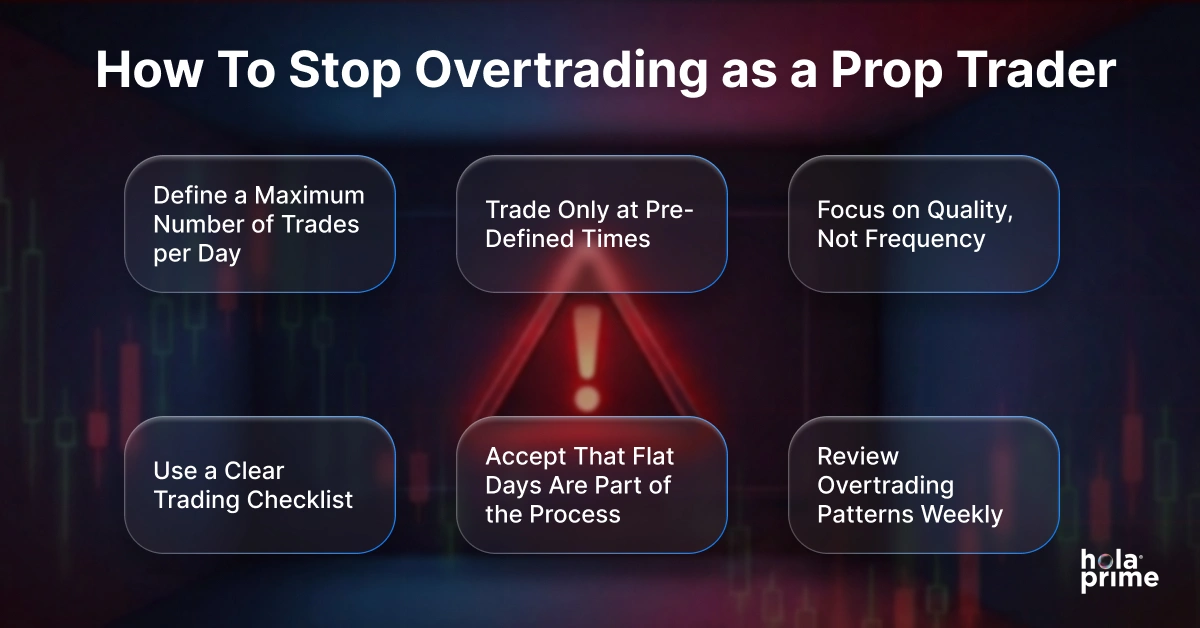
Define a Maximum Number of Trades per Day
One of the simplest fixes is setting a daily trade limit. This forces you to be selective.
If you know you can only take two or three trades, you naturally wait for better setups. This reduces impulsive entries and keeps emotions in check.
Trade Only at Pre-Defined Times
Many overtrades happen outside active market hours. Choose specific sessions where your strategy works best and avoid trading outside them.
For example, if your edge works during the New York session, there is no reason to trade during slow or unpredictable hours.
Focus on Quality, Not Frequency
One clean trade that follows your rules is more valuable than five average trades.
Before entering a trade, ask yourself a simple question. Would I still take this trade if I were already funded and protecting profits? If the answer is no, skip it.
Use a Clear Trading Checklist
A checklist slows you down. It forces logic to step in before emotions take over.
Your checklist can include trend direction, entry signal, risk level, and rule compliance. If one item is missing, you do not trade.
Accept That Flat Days Are Part of the Process
Some days the market does nothing. On those days, the best trade is no trade.
Successful prop traders understand that consistency comes from avoiding bad trades, not chasing good ones.
Review Overtrading Patterns Weekly
Instead of just reviewing wins and losses, review behavior.
Look for questions like:
Did I trade outside my plan?
Did I increase size emotionally?
Did I trade after hitting my limits?
Over time, patterns become clear, and awareness alone reduces overtrading.
The Role of Discipline in Funded Accounts
Once funded, overtrading becomes even more dangerous. The goal shifts from passing a challenge to protecting capital and growing steadily.
Funded traders who survive long term are not the most aggressive ones. They are the most disciplined. They trade less, not more. They respect rules, accept slow periods, and focus on repeatable execution.
Final Thoughts
Overtrading is not a strategy problem. It is a behavior problem.
Most prop traders already know what they should do. The challenge is having the discipline to wait, to skip trades, and to accept that less can be more.
If you want to last in prop trading, focus on controlling your actions, not forcing results. The moment you trade less but with intention, consistency starts to follow.