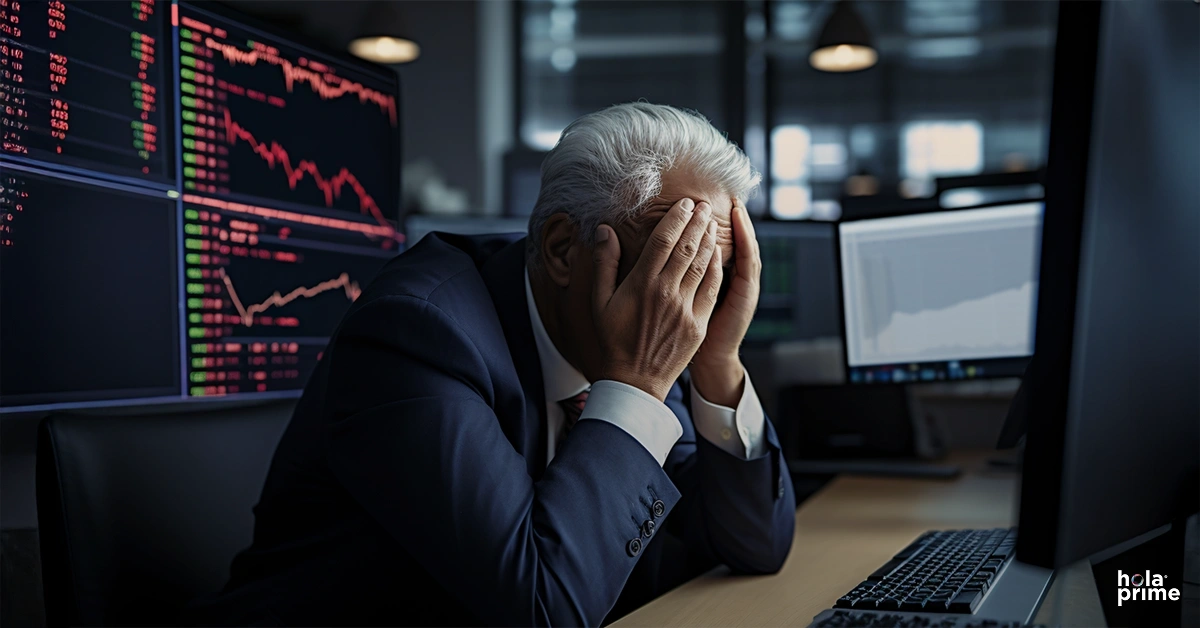
Emotions like frustration, fear, greed, and excitement can take over quickly. When that happens, traders stop following their plan and start reacting to the market. This is where trading psychology becomes important. Many traders do not fail because they lack technical knowledge. They fail because they cannot control emotions when real money, drawdown, or a prop firm challenge is involved.
FOMO trading, revenge trading, overtrading, poor risk management in trading, and weak trading discipline are some of the most common reasons traders break their own rules. These mistakes are especially dangerous for day traders because day trading psychology requires fast decisions under pressure.
In this blog, we will cover the most common emotional trading mistakes, why they happen, and how to avoid them. You will also learn how to control emotions in trading and build the discipline needed to make decisions with a clearer mind.
What Is Emotional Trading?
Emotional trading happens when a trader makes decisions based on feelings instead of logic, strategy, or analysis.
For example, imagine you take three losing trades in a row and then double your position size to “get it all back.” That is emotional trading. The trade is no longer based on your setup. It is based on frustration.
Emotional trading can show up in many ways:
-
Entering because of FOMO trading
-
Increasing size after a loss
-
Closing winners too early
-
Holding losers too long
-
Ignoring stop-loss levels
-
Taking trades outside your plan
-
Overtrading after a winning or losing streak
-
Breaking risk management rules
At the moment, the decision may feel right. But when you review the trade later, you usually realize that emotions were controlling the decision.
In prop trading, emotional trading can be even more damaging because there are rules around drawdown, daily loss limits, consistency, and risk. One emotional decision can affect the whole account.
That is why trading psychology, risk management in trading, and trading discipline must work together. A good strategy is not enough if emotions keep pulling you away from it.
Common Emotional Trading Mistakes

1. Overtrading
Overtrading happens when traders take too many trades, often without proper setups. It usually starts when a trader feels they must always be active in the market.
For example, suppose your daily loss limit is $500. You are down $400 in the morning, but instead of stopping, you keep trading aggressively. By the end of the day, you may be down $1,000 and have broken your own rules.
Overtrading is common in day trading psychology because the market is always moving. Every candle can feel like a new opportunity. But more trades do not always mean better results.
Many traders overtrade because they are bored, frustrated, or afraid of missing the next move. This connects closely with FOMO trading and revenge trading. After a loss, a trader may keep entering again and again, hoping one trade will fix the day.
How to avoid overtrading
Set a maximum number of trades per day before the session starts. For example, you may decide to take no more than three trades in one session. Also set a daily loss limit and stop trading when you reach it.
A simple rule can be:
“If I take two losses in a row, I stop trading for the session.”
This builds trading discipline because it forces you to protect your account instead of reacting emotionally.
Also Read- Why Traders Lose Discipline After Big Gains
2. FOMO Trading
FOMO trading means entering a trade because you fear missing out on a move. It usually happens after price has already moved sharply.
For example, Bitcoin is pumping quickly, and social media is full of people talking about it. You enter late because you feel the move will continue forever. But soon after you enter, price reverses.
That is FOMO trading.
The problem is not only the late entry. The bigger issue is that the trade was not planned. You entered because of emotion, not analysis.
FOMO trading is one of the most common emotional trading mistakes because traders compare themselves with others. They see screenshots, profit posts, or fast moves and feel left behind.
In reality, missing a trade is not a loss. Entering a bad trade because of FOMO can become a real loss.
How to avoid FOMO trading
Remind yourself that the market will always give another setup. You do not need to catch every move.
Before entering, ask:
-
Was this trade in my plan?
-
Did I mark this level before the move?
-
Am I entering because of analysis or emotion?
-
Is my stop-loss clear?
-
Am I chasing price?
If the answer shows emotion, skip the trade. Good trading discipline means accepting that not every move belongs to you.
3. Revenge Trading
Revenge trading happens when a trader tries to win back money immediately after a loss. It is one of the clearest signs that emotions have taken over.
For example, you lose $300 on a bad entry. Instead of accepting the loss, you double your position size on the next trade to recover quickly. If that trade also loses, the damage becomes much bigger.
Revenge trading turns one normal loss into a bigger problem.
Losses are part of trading. But revenge trading treats a loss like a personal attack. The trader stops thinking about the market and starts thinking about getting even.
This is dangerous because revenge trading often leads to overtrading, oversized positions, and broken risk management rules.
How to avoid revenge trading
Create a cooldown rule.
After a loss, step away from the screen for 10 to 20 minutes. Do not enter another trade immediately. Write down what happened and check whether the loss was planned or emotional.
A useful rule is:
“After one loss, I pause. After two losses, I stop.”
This protects your account and improves trading psychology because you are training yourself to respond with discipline instead of emotion.
4. Greed
Greed happens when traders want more than the market is offering. It often appears when a trade is already in profit.
For example, your plan says to exit at $950 profit, but the trade reaches that level and you hold because you think it might go higher. Then price reverses and your profit drops to $100, or worse, turns into a loss.
Greed convinces traders that the market owes them more. It does not.
Greed can also lead to oversized trades. A trader may win a few trades and then increase risk too quickly, believing the next trade will also work.
This is where risk management in trading becomes important. Without clear rules, greed can slowly destroy a good day.
How to avoid greed
Set take-profit levels before entering the trade. Decide where you will exit and why.
You can also use partial profits. For example, you may close part of the position at the first target and let the rest run with a stop-loss adjustment.
The key is to make the decision before emotions appear.
Trading discipline means following the plan even when greed tells you to hold longer.
5. Overconfidence
Confidence is important in trading, but overconfidence is dangerous.
Overconfidence usually appears after a winning streak. A trader wins several trades and starts feeling unstoppable. They increase lot size, ignore risk rules, or take setups they would normally avoid.
For example, a trader grows the account by 10% in a week and then starts doubling position size. One bad trade can wipe out much of that progress.
Overconfidence is a trading psychology problem because the trader starts trusting feelings more than rules.
In prop trading, overconfidence can quickly lead to broken drawdown limits or rule violations.
How to avoid overconfidence
Keep your risk the same even after winning trades. Do not increase position size just because you feel good.
After a winning streak, review your trades and ask:
A good trader stays humble after wins and losses. Trading discipline is not only needed during bad days. It is also needed during good days.
6. Setting Unrealistic Targets
Unrealistic targets create unnecessary emotional pressure.
For example, expecting a $50,000 account to make $10,000 every day is not realistic for most traders. When the target is too aggressive, the trader starts forcing trades.
This often leads to:
Unrealistic goals make traders feel like they are always behind. That feeling damages day trading psychology because every missed move starts to feel like failure.
How to avoid unrealistic targets
Set goals based on process, not only profit.
Instead of saying, “I must make $1,000 today,” say:
-
I will take only valid setups.
-
I will risk a fixed amount per trade.
-
I will stop after two losses.
-
I will not chase trades.
-
I will follow my journal checklist.
Profit goals are fine, but they should not force emotional trading. A good process gives you a better chance of consistent results.
7. Failure to Cut Losses
Many traders hold losing trades because they hope price will come back. Hope is not a risk management plan.
For example, a trader enters a buy position, but the market starts falling. Instead of accepting the stop-loss, they move the stop further away. The loss grows, and the trader becomes emotionally attached to the trade.
This is one of the most dangerous emotional trading mistakes.
A small planned loss is manageable. A large emotional loss can damage confidence, account balance, and trading discipline.
In prop trading, failing to cut losses can quickly lead to drawdown problems.
How to avoid holding losers
Place your stop-loss before entering the trade and accept it as part of the plan.
Before every trade, ask:
-
Where is my stop-loss?
-
How much can I lose?
-
Does this risk fit my plan?
-
Will this loss damage my account?
-
Am I willing to accept this outcome?
Risk management in trading should happen before entry, not after the trade starts moving against you.
How to Control Emotions in Trading
Learning how to control emotions in trading does not mean removing emotions completely. That is not realistic. The goal is to stop emotions from controlling your actions.
Here are practical ways to reduce emotional trading and improve trading discipline.
Set Clear Expectations
Before trading, be realistic about what you want to achieve.
If your target is too aggressive, you will feel pressure. That pressure can lead to FOMO trading, revenge trading, and overtrading.
Set daily and weekly expectations that match your strategy and risk tolerance. Also define when you will stop trading.
For example:
-
Stop after two losses.
-
Stop after reaching the daily profit goal.
-
Stop after one emotional mistake.
-
Stop during high-impact news if it is not part of the plan.
Clear expectations reduce emotional pressure.
Develop a Trading Plan
A trading plan is your defense against emotional trading.
Your plan should include:
-
Entry rules
-
Exit rules
-
Stop-loss rules
-
Position size
-
Maximum daily loss
-
Maximum trades per day
-
News rules
-
Session rules
-
Trade review process
A strong plan builds trading discipline because it gives you something to follow when emotions appear.
Without a plan, every decision becomes emotional.
Choose Logic and Analysis Over Emotions
Base trades on data, not feelings.
Before entering a trade, check your setup, support and resistance, trend direction, volatility, and risk. Do not enter only because the market “looks like it will go up.”
Emotional trading often starts with vague thinking. Logical trading starts with clear reasons.
A simple pre-trade checklist can help:
If the trade does not pass the checklist, skip it.
Use Stop-Loss and Take-Profit Orders
A stop-loss and take-profit order can help protect you from emotional decisions during the trade.
When the trade is open, emotions become stronger. Fear makes you close too early. Greed makes you hold too long. Hope makes you move the stop.
That is why risk management in trading should be planned before entry.
If your plan says the maximum risk is $200, do not move the stop to risk $500. If your target is reached, do not ignore it just because greed appears.
Automation does not remove responsibility, but it helps reduce emotional interference.
Take Breaks
Trading requires mental energy. When you are tired, frustrated, or overstimulated, emotional trading becomes more likely.
Breaks are especially important for day trading psychology because day traders make decisions quickly and repeatedly.
Take a break when:
-
You hit your daily loss limit.
-
You take two losses in a row.
-
You feel angry.
-
You feel too excited.
-
You want to revenge trade.
-
You are forcing trades.
-
You feel tired.
A 10-minute walk away from the screen can prevent a bad decision.
Cut the Noise
Too much noise can trigger emotional trading.
Social media, random trading groups, unverified news, and hype posts can create FOMO trading. When you constantly see people claiming huge profits, it becomes harder to follow your own plan.
Limit what you consume during trading hours.
Use trusted news sources, economic calendars, and your own trading plan. Do not let random opinions decide your trades.
Trading discipline becomes easier when your environment is clean.
Build a Trading Journal
A journal helps you see your emotional patterns.
After every session, write down:
-
What trades you took
-
Why you entered
-
Whether you followed your plan
-
What emotions you felt
-
Whether FOMO trading appeared
-
Whether revenge trading appeared
-
Whether you overtraded
-
Whether risk management was followed
Over time, your journal will show the truth. You may discover that most losses happen after the first losing trade, during news, or when you trade outside your main session.
This is how trading psychology improves: you identify the pattern, then build rules to stop it.
Conclusion
Emotional trading mistakes are common, but they can be reduced with the right process.
FOMO trading, revenge trading, overtrading, greed, overconfidence, unrealistic targets, and failure to cut losses all come from the same place: emotions taking control of the plan.
The solution is not to become emotionless. The solution is to build structure.
A written plan, clear risk limits, stop-loss discipline, daily trading rules, breaks, journaling, and clean information sources can help you control emotions in trading.
Trading psychology is a skill. Day trading psychology is even more demanding because decisions happen quickly. The more you practise trading discipline, the better you become at staying calm when the market becomes difficult.
If you can control your emotions, manage risk, and follow your plan, you are already ahead of many traders.