In this blog, we’ll explore how seasonality plays out in the commodity futures market, especially for gold and oil. These two markets attract massive volumes every day, and traders often look at seasonal patterns to improve timing and strategy. We’ll break down what seasonality is, why it matters, how it typically appears in gold and oil futures, and whether these patterns still hold weight in modern markets.
What is Seasonality in Commodity Futures?
Seasonality is when price behavior can be predicted given a time of year. Price changes occur predictably due to demand and supply shifts related to weather, harvest cycles, production schedules, and cultural differences. For agricultural commodities, there is often a significant seasonal component, given that supply is heavily influenced by planting and harvest cycles.
For a commodity like oil or gold, prices may exhibit seasonal behavior not directly related to planting or harvest cycles, but more due to related economic activity or consumer behavior and change. For example, the demand for gold increases during cultural festive seasons in certain countries where gold embodies a tradition or norm. The demand for oil increases during spring/summer and seasonal travel periods, and demand may also change with weather-induced seasonal heating/cooling needs for homes and businesses.
While seasonality may not imply that future prices will replicate seasonal patterns, seasonality provides an organized and understandable framework for traders to forecast when the market may become more active and/or exhibit directional characteristics.
Why Seasonality Matters in Trading?
Seasonal trends can be a useful component in a trader's approach. When you know that a market tends to rally or decline in certain months, it helps you trade strategically. For example, if you know that crude oil typically sees stronger prices in the summer months due to increased travel demand, a trader can use that information to anticipate long opportunities during the summer months.
Large institutions also watch seasonal patterns. Many of them adjust their physical inventories, hedges, and speculative positions according to these tendencies. When many market participants follow similar patterns, the seasonal effect can become more pronounced.
It’s important to see seasonality not as a shortcut, but as an additional filter. When used alongside technical and fundamental analysis, it can improve timing and help traders avoid random entries.
Seasonality Patterns in Gold Futures
Over the years, gold has displayed some significant seasonality. Perhaps one of the most notable is that it is typically strong in the last quarter of the year. There are several reasons for this. In countries like India, the need for gold increases during the festive season and wedding months, which are predominantly in the latter half of the year. The cultural impact on the price of gold can be meaningful throughout the world.
In addition to cultural effects, gold also tends to rally during times of uncertainty. In late fall, markets can experience increased volatility, a redistribution of assets in portfolios, or macroeconomic uncertainty. This signifies safe-haven buying. Traders notice that gold prices tend to have upward pressure from September to December.
Another tendency is the late summer pullback that sometimes happens after mid-year rallies. This is not a hard rule, but looking at historical charts often reveals dips in late summer, which some traders use as accumulation periods before the stronger months kick in.
Intermediate traders often combine these tendencies with chart patterns or fundamental cues. For example, if gold enters a strong seasonal period and a breakout pattern forms on the daily chart, that can offer a higher probability setup.
Seasonality Patterns in Crude Oil Futures
The seasonal patterns of oil are often correlated with economic activity and weather. One of the most consistent seasonal trends with crude oil is the increase in demand in the summer months in the United States, also known as driving season. As individuals travel, the consumption of fuel increases demand for crude oil and refined products. The buildup generally starts in late spring when refineries increase production.
Spring refinery maintenance is another contributing factor. Refineries generally conduct maintenance before the summer increase in demand, which can place a short-term restriction on supply and affect pricing. When maintenance ends, and production increases, pricing tends to climb as the peak driving season approaches.
Winter can also bring seasonal strength due to heating oil consumption, particularly in cooler regions. The Gulf of Mexico hurricane season can bring supply disruptions and volatility toward the end of summer and early fall.
These seasonal trends have been in place for decades. While they may change based on geopolitical or macroeconomic shocks, they typically offer a good framework for traders to reference. Many oil traders will reference seasonal charts to align with specific times of the year when trends may be more prone to lining up with history.
Does Seasonality Actually Work in Modern Markets?
In the past two decades, the nature of markets has changed. Algorithmic trading, faster transmission of information, and changes in consumption patterns have all influenced price behavior. Some traders argue that seasonality is no longer as reliable as before, as many unexpected events can disrupt historical patterns.
However, many seasonal patterns are still evident, just less smooth than in the past because the fundamental reasons have not changed. People still travel during summer months, there is still a gold-buying season during cultural festivals, and there is still an impact on our energy consumption from the weather. What has changed is the need to add additional analysis to seasonality to filter out false signals.
For example, a trader may observe that oil prices generally rally in May, but if macro data or geopolitical tensions are moving in a bearish direction, it would be dangerous to rely solely on seasonal analysis. On the other hand, if the seasonal strength of the price is showing and is also aligning with other technical breakout levels and gradually improving fundamentals, then the trade idea may have more merit.
How Traders Can Use Seasonality in Their Strategy
Intermediate traders often use seasonal analysis as part of a broader strategy rather than the main driver. Here are a few practical ways to do that:
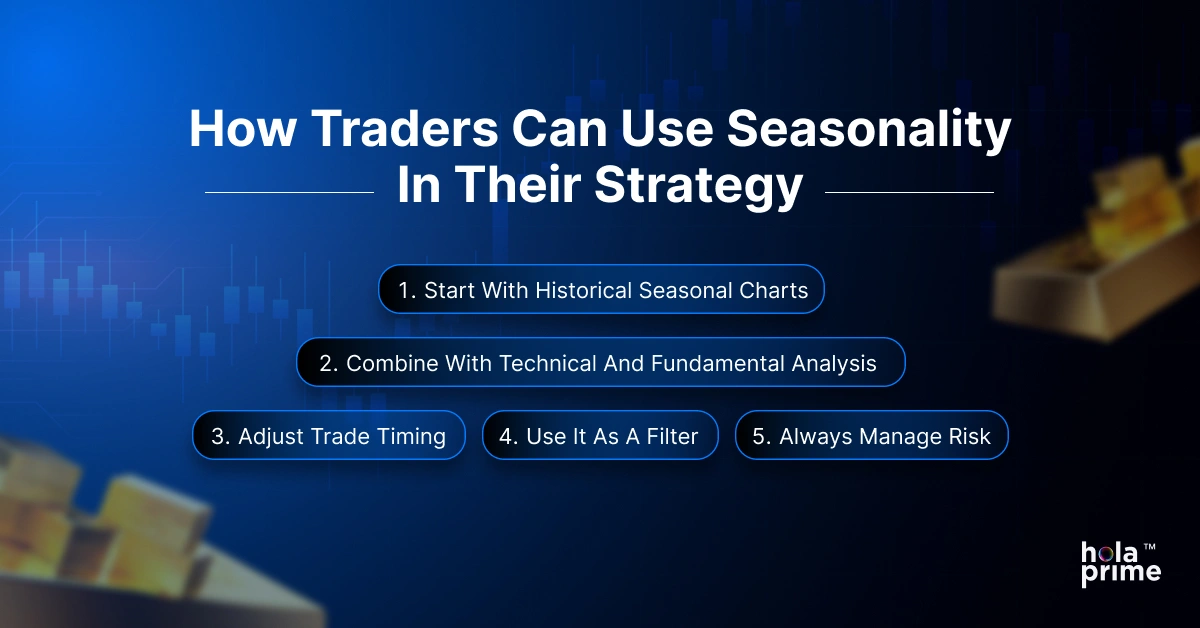
1. Start with Historical Seasonal Charts
Look at average monthly returns or seasonal price tendencies over the last 10 to 15 years. This gives you a sense of recurring patterns.
2. Combine with Technical and Fundamental Analysis
If a seasonal tendency aligns with a breakout, support zone, or fundamental theme, it can offer a higher conviction trade.
3. Adjust Trade Timing
Seasonality can help you time entries and exits more effectively. For example, entering before a historically strong period and managing risk during weaker months can improve trade structure.
4. Use It as a Filter
Instead of forcing trades because a month is “supposed” to be bullish, use seasonality to confirm or reject trade ideas.
5. Always Manage Risk
Seasonal patterns can fail. Unexpected events, policy changes, or large market shocks can override historical tendencies. Always use stop losses and position sizing.
Final Thoughts
Seasonality can offer a major advantage for commodity futures traders, particularly in the markets of oil and gold. These markets exhibit seasonal tendencies that often repeat themselves due to cultural, economic, and weather-related reasons. Though many modern markets can be considered less predictable, many seasonal tendencies can still offer relevant information as part of a more comprehensive analysis of markets and prices.
If you incorporate the discipline of seasonality in a broader trading strategy that includes a credible blend of technical analysis, fundamental analysis, and strict risk management, it can provide a profit edge. Seasonality does not provide a magical panacea, but for traders who have a depth of understanding of a price pattern classification in all asset types, it can add both timing and depth to a trading strategy.

 EN
EN DE
DE