You can have the best trading strategy, the fastest charts, and even a solid risk plan - but if your mind works against you, consistency will always be out of reach. Most traders don’t fail because they lack technical knowledge; they fail because of psychological biases that quietly influence their every decision. These mental shortcuts can make us overconfident after a win or irrationally fearful after a loss. And in a market as fast as forex, those small emotional slips can cost a lot.
Why Psychology Matters More Than Strategy
Every trader has experienced moments when logic disappears - holding onto a losing position, adding to a bad trade, or closing a winner too early. These are not just emotional mistakes; they’re signs of deep-rooted biases that shape how we see the market. The truth is, trading psychology isn’t just about managing fear or greed. It’s about understanding how your mind interprets data and how those interpretations lead to repeated behavior. Recognizing these mental traps is the first step toward breaking them.
What Are Cognitive and Emotional Biases in Trading?
A cognitive bias refers to a mental shortcut that helps people make quick decisions, but nearly always sacrifices accuracy. In trading, cognitive biases can influence how we construct meaning from information, interpret market moves or trends, and manage risk. Emotional biases come from emotion: fear, greed, or frustration. An example would be rationalizing it was a good trade, or you do not want to admit your trade was wrong; that is ego-driven bias. Each of these biases manifests itself daily in our trading behavior, even in professional traders.
In short, while your system tells you what to trade, your psychology decides how you trade it.
Common Psychological Biases Every Forex Trader Faces
1. Anchoring Bias
Anchoring bias happens when traders fixate on a particular price level or piece of information and refuse to adjust their outlook. You might think, “EUR/USD was at 1.1000 last week, so it should go back there.” That single reference point becomes your anchor, even if market conditions have changed completely. This bias keeps traders stuck, waiting for prices to “return to normal.” The best way to avoid this trap is by relying on real-time structure and market context, not past price memories.
2. Overconfidence Bias
Overconfidence is one of the most dangerous biases in trading. After a few winning trades, it’s easy to believe you’ve “figured out” the market. This feeling pushes traders to take larger positions, skip their usual confirmations, or ignore stop losses. The problem is, markets constantly change. What worked yesterday might not work today. Keeping a trade journal helps keep you grounded. When you review your trades honestly, you’ll see that consistent results come from discipline - not ego or luck.
3. Loss Aversion
Loss aversion is the tendency to fear losses more than we value equivalent gains. For example, losing $100 feels worse than the pleasure of earning $100. In trading, this bias leads to holding losing trades for too long and closing profitable ones too early. A trader might think, “I’ll just wait for it to come back,” but it rarely does. To counter this, you must treat losses as part of the game. Define risk before entry, accept it emotionally, and move on when it’s hit.
4. Confirmation Bias
Confirmation bias makes traders seek information that supports their existing view while ignoring data that contradicts it. Let’s say you’re bullish on GBP/USD. You’ll subconsciously read only the bullish forecasts and overlook the bearish reports. This gives a false sense of confidence that your analysis is correct. A practical way to fight this bias is to ask yourself, “What would prove my idea wrong?” before entering a trade. This forces you to stay objective and flexible.
5. Recency Bias
Recency bias makes us give too much importance to recent experiences and forget the bigger picture. A trader who loses three trades in a row might think their entire strategy has failed, even if it’s profitable over 100 trades. Similarly, a few wins can make someone believe they’ve mastered the market. The cure is data. Reviewing performance over a large sample size helps you see trends for what they are, not just what happened yesterday.
6. Gambler’s Fallacy
This bias appears when traders believe that after a streak of losses, a win is “due.” The mind expects balance, but markets don’t work that way. If you’ve had five losing trades in a row, that doesn’t increase your odds of winning the next one. Yet, many traders double their position size out of frustration - a classic revenge trading behavior. To avoid this, treat every trade as independent. Your edge plays out over time, not in single outcomes.
The Hidden Role of Ego in Trading Decisions
Ego quietly fuels many of these biases. It makes traders attach their identity to their success or failure. You’ve probably seen traders who refuse to cut losses because “the market will turn” or those who can’t accept criticism about their strategy. Ego blinds us from reality and prevents growth. The moment you stop needing to “be right” and start focusing on trading well, your performance naturally improves. Professional traders separate the trade from the trader - and that’s what keeps them consistent.
How to Identify Your Biases
You can’t fix what you don’t notice. The easiest way to spot your biases is through journaling. Write down what you were thinking and feeling during each trade - not just your technical reasoning. Over time, patterns will emerge. Maybe you always overtrade after a big win or hesitate after a loss. These emotional cycles reveal your biases in action. Another good practice is to review trades weekly and ask three questions: What was my plan? What did I actually do? Why did I deviate? Honest reflection builds awareness, and awareness reduces bias.
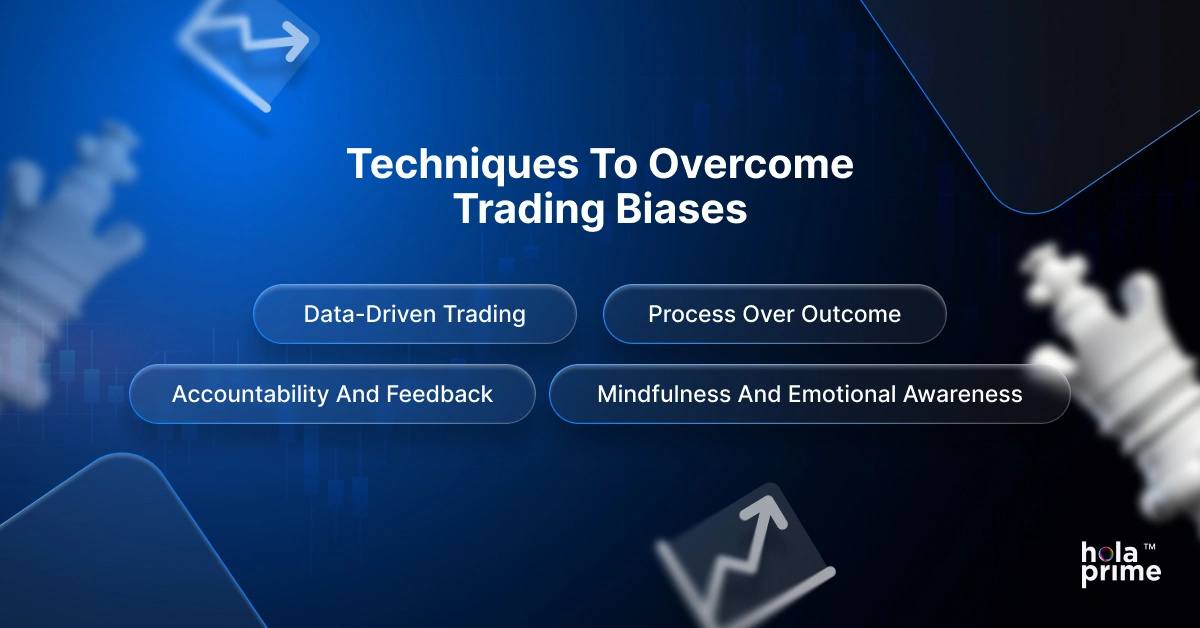
Techniques to Overcome Trading Biases
1. Mindfulness and Emotional Awareness
Before you enter a trade, ask yourself where you are emotionally. Are you bored, frustrated, or confident? Recognizing the things that trigger your emotions is half the fight. Many successful traders find themselves pausing before they respond, in essence creating thinking space or a gap for you to even decide if they should react or not, and this allows them some time to consider the situation in front of them. Mindfulness also builds awareness that allows us to observe the thinking without having to create our "life" or "death" reaction and allows us to keep our rational thinking and decision-making in line with our overall goals, even under extreme pressure, to not react impulsively when the market moves against them on the next trade.
2. Data-Driven Trading
Numbers don’t lie, feelings do. When you journal your trades and get back to using backtesting and just tracking your performance that pulls away from thinking about how you feel, towards what your data says will begin to shift your thoughts. When your edge is profitable when you are backtesting, you do not have to rely on your gut instinct. Over time this should also alleviate overconfidence and doubt and gain some trust in the development process because you are relying on even the data that you encourage and not your instinct.
3. Accountability and Feedback
Having a mentor, community, or trading partner can help you spot patterns you can’t see yourself. Sometimes, others notice your biases before you do. Prop traders often benefit from having supervisors or peers who review their trades. This external feedback creates discipline and keeps emotions in check.
4. Process Over Outcome
The best traders focus on following their plan, not chasing profits. This mindset shift is powerful because it removes emotional attachment to results. Every trade becomes a data point, not a reflection of your worth. When you measure success by consistency rather than P&L, you naturally become less reactive and more balanced in decision-making.
Why Prop Traders Must Master Psychology
In prop trading, psychological control isn’t optional - it’s a performance requirement. Challenges come with strict drawdown limits, profit targets, and daily consistency rules that push emotional boundaries. Traders who can’t manage their biases often fail not because of bad strategy, but because they lose emotional control under pressure. Prop firms value mindset stability as much as profit because they know that trading skill without discipline is short-lived. Learning to regulate your biases gives you a real edge, especially when trading firm capital.
Conclusion: Turning Awareness into an Edge
Recognizing your psychological biases doesn’t mean you’ll never experience them again - it means they’ll stop controlling you. Every trader deals with emotion, uncertainty, and mental shortcuts. The difference lies in awareness. Once you start observing your thought patterns, you can adjust your actions before they cause damage. In trading, mastering your mind is just as important as mastering your system. Over time, that awareness becomes your greatest edge - one that no indicator can replicate.

 EN
EN DE
DE