If you’ve ever wondered why the price suddenly reverses right before your entry or why stop-losses get triggered in seconds, you’re not alone. Many traders experience this daily without realizing that it often has little to do with random price action - and everything to do with order flow. Order flow analysis is about reading the market’s internal mechanics, seeing where real buying and selling pressure exists, and understanding how “smart money” moves behind the charts you see.
What Is Order Flow in Forex?
Order flow represents the real-time transactions happening in the market - the actual orders being placed, filled, or canceled. While traditional forex charts only show price and time, order flow gives you a deeper look at the why behind those moves. It helps you understand whether large players are entering or exiting positions, and whether price is rising due to genuine demand or simply because liquidity is drying up.
In short, order flow helps traders track who is in control - buyers or sellers - and how strong that control really is.
How Order Flow Works in Forex:
To grasp order flow, you need to understand the types of orders that make up market movement. Every candle on your chart reflects the result of thousands of these orders being matched in milliseconds. Let’s break it down.
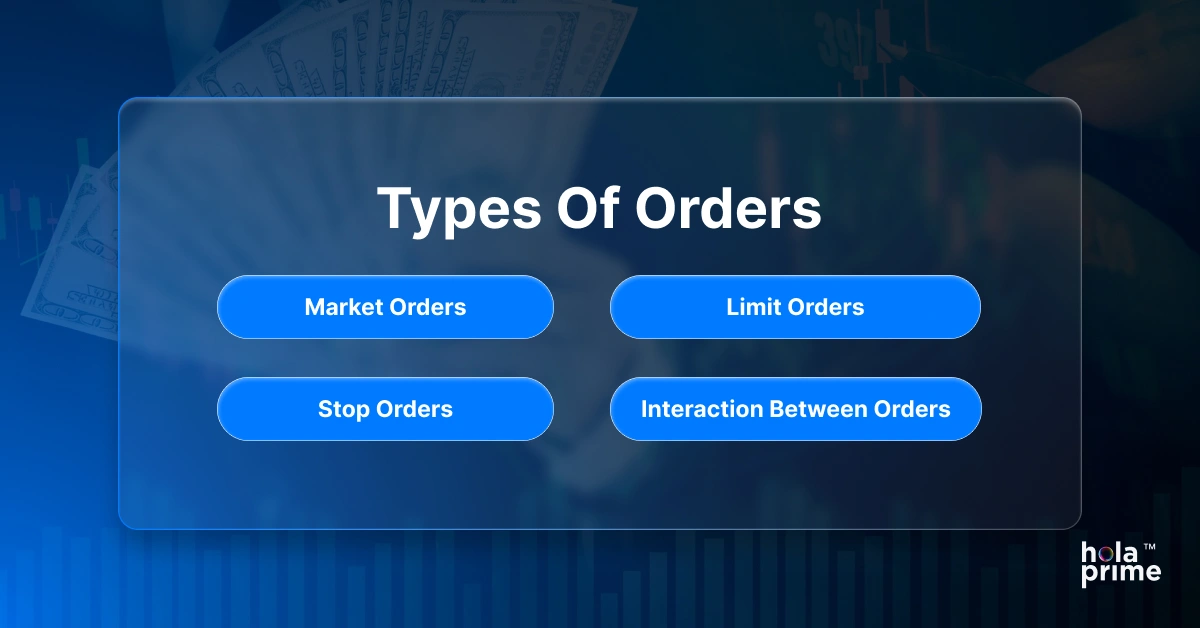
1. Market Orders
A market order is an instruction to buy or sell instantly at the best available price. These orders move the market because they hit existing limit orders in the order book. For instance, when a big institutional trader buys using market orders, they consume available liquidity, pushing prices upward. On the other hand, a wave of sell market orders drives prices down. Watching this imbalance between aggressive buyers and sellers gives you the first clue about market intent.
2. Limit Orders
Limit orders sit passively in the market, waiting for the price to come to them. Think of them as resting liquidity. If a bank wants to sell EUR/USD at 1.1640, they’ll place a sell limit order there. When price hits that level, it triggers their order - often causing a short-term reversal or pause. Understanding where these large limit orders may be resting helps traders anticipate turning points or congestion zones before they form on the chart.
3. Stop Orders
Stop orders are often hidden liquidity - they become active only when the price hits certain levels. Retail traders usually place stops near obvious highs or lows, and institutions know that. Smart money often pushes price into these zones to trigger stops, fill their own large orders at better prices, and then reverse direction. Recognizing where stops are likely clustered can help you avoid being part of the liquidity that smart money hunts.
4. Interaction Between Orders
All these order types interact in a continuous battle. Market orders drive price, limit orders absorb it, and stop orders add sudden bursts of volatility. By watching how price behaves around known liquidity zones, traders can identify when large players are entering or exiting, even if they can’t see the full order book like in futures markets.
Why Order Flow Matters to Prop Traders
In prop trading challenges or live funded accounts, managing risk and timing are everything. Order flow gives traders an advantage because it reveals intent rather than just reaction. Instead of relying only on lagging indicators, prop traders can use order flow to anticipate moves. For instance, a sudden surge in aggressive buy orders near support could suggest institutional accumulation — a potential low-risk entry zone before the broader market catches on.
This understanding also helps traders avoid false breakouts and identify genuine momentum shifts — skills that directly impact consistency and profit split potential in a prop firm environment.
Tools for Analyzing Order Flow
You don’t need a Wall Street terminal to analyze order flow effectively. Several tools can provide a clear view of how orders move the market. Here are the main ones that serious forex traders use.
1. Level 2 Data (Depth of Market)
Level 2 data, or DOM (Depth of Market), shows the pending buy and sell orders at various price levels. It’s like peeking inside the market’s waiting room — you can see where liquidity is stacked. While not every forex broker offers true Level 2 data, platforms linked with ECN accounts or futures data feeds often do. Watching how these orders shift gives valuable clues about potential reversals or continuation points.
2. Footprint Charts
A footprint chart visualizes the number of buy and sell orders executed at each price level within a candle. It lets you see where buyers or sellers dominated during that period. For example, if a candle closes higher but shows heavy selling within it, that may indicate absorption — large players selling into retail buying pressure. Recognizing these footprints helps traders spot subtle shifts before they become visible in price action.
3. Volume Profile
Volume Profile displays how much volume is traded at each price level over a specific time. This tool helps identify high-volume nodes (areas of interest for institutions) and low-volume zones (potential breakout or rejection areas). When used with order flow data, volume profile highlights the price levels that truly matter, not just the ones retail traders focus on.
4. Tape Reading (Time and Sales)
Tape reading, or the time and sales window, shows a real-time list of executed trades. Watching the tape helps traders see the speed and size of transactions. A sudden burst of large orders at one price can signal a breakout attempt or aggressive entry by institutions. This is one of the oldest but most powerful ways to understand real market activity.
How to Spot Smart Money Moves
Smart money doesn’t chase price — it creates it. The challenge is learning to recognize their footprints before the move becomes obvious. Here’s how to do it.
1. Look for Liquidity Zones
Smart money needs liquidity to enter large positions without causing massive price slippage. These zones often exist around major highs, lows, or round numbers. When you see price spikes into these areas, trigger stops, and then sharply reverse, it’s often a sign that institutions were quietly filling orders while retail traders were getting trapped.
2. Watch for Imbalances
When aggressive buying overwhelms sellers (or vice versa), price creates an imbalance. This often shows up as wide candles or strong directional bursts on your chart. Smart money uses these imbalances to manipulate price — pushing it just enough to create liquidity, then reversing it to fill orders in the opposite direction. Observing how price behaves after these spikes can tell you if it was a real move or a fakeout.
3. Confirm with Price Action
Order flow alone isn’t enough; it works best when combined with clean price action. For instance, after a liquidity grab, if you see a strong rejection candle or a shift in market structure, that’s your confirmation. Smart money typically moves in phases — accumulation, manipulation, and distribution. Spotting these patterns early lets you align with institutional flow rather than fight it.
Tips for Using Order Flow in Real Trading
Always analyze order flow around major events like FOMC statements or CPI releases, where liquidity and volatility surge.
Combine order flow with higher-timeframe context — institutional moves often begin on the higher charts but execute in bursts on the lower ones.
Keep your execution simple. Even if you can’t access advanced tools, watching reaction around key levels and using volume spikes as confirmation can provide a lot of insight.
Common Mistakes to Avoid
One common mistake is overcomplicating order flow. Many traders drown in data and forget the basics — order flow is just about who’s buying, who’s selling, and why. Another is assuming large orders always mean institutional intent. Sometimes they’re just hedges or arbitrage plays. The key is context. Learn to pair order flow signals with structure, volume, and timing instead of relying on them in isolation.
Conclusion
Order flow analysis brings you closer to the real market engine — the tug-of-war between buyers and sellers. By understanding how orders interact, where liquidity pools form, and how smart money manipulates price, you gain clarity beyond charts and indicators. For prop traders, this insight can be a genuine edge — helping you anticipate moves instead of reacting to them. With practice, order flow becomes less about tools and more about reading the market’s language itself.

 EN
EN DE
DE