Trading can be rewarding, but it is also filled with emotional challenges. One of the biggest pitfalls traders face is revenge trading. This happens when someone takes a loss and immediately jumps back into the market, not because of a good setup but because of frustration and the urge to recover quickly. When you mix this behavior with high-volatility instruments like Gold Comex contracts, the risks multiply. Gold is known for sharp price moves influenced by global events, and when emotions meet volatility, the outcome is rarely favorable. In this blog, we will look at why revenge trading happens, why gold contracts make it worse, and what practical steps you can take to avoid falling into this trap.
What is Revenge Trading?
Revenge trading is when you try to “win back” money after a loss, often by taking larger or poorly planned trades. It’s less about strategy and more about emotion. Many traders experience it after a big setback, especially when they feel they should have done better. For example, if a trader loses $500 on a gold futures contract because of a sudden price spike, he might immediately enter another position with twice the size, hoping to recover. More often than not, this only leads to another loss. The main drivers here are frustration, fear of missing out, and the human tendency to avoid pain by chasing quick relief.
Why is Gold Comex Prone to Triggering Revenge Trading?
Gold Comex contracts rank among the most unpredictable tools in the futures market. Their prices can shift within minutes, often set off by worldwide news, decisions from central banks, or global political events. Take, for instance, an unexpected announcement about U.S. interest rates - it can make gold's value jump or drop by $20 or more in no time. When you trade using borrowed money and leverage, even a tiny price change can have a huge effect on your wallet.
This environment is exciting but also dangerous. A trader might think he spotted a solid entry, only for the price to reverse sharply. That sudden whipsaw action can lead to frustration, and if a trader doesn’t step back, it often results in revenge trading. Unlike slower markets, where you might have time to rethink or adjust, gold tends to move too fast, and the emotional response can be immediate. The mix of fast pace, leverage, and high stakes makes it a perfect breeding ground for revenge trades.
The Dangers of Revenge Trading in High-Volatility Markets
Revenge trading in contracts like Gold Comex is not just risky - it’s often destructive. One danger is that it can wipe off the capital. If you trade impulsively after a loss, you’re likely to ignore proper risk management. Instead of following your plan, you trade larger positions or enter setups you normally wouldn’t touch. This can quickly drain your account.
Another danger is psychological burnout. High-volatility markets already demand a lot of focus and discipline. When you mix in frustration and anger, your decision-making deteriorates further. Instead of seeing the market clearly, you see it through the lens of your recent loss. This emotional tunnel vision causes traders to miss better opportunities, compounding the damage. Over time, revenge trading can make someone associate trading with stress and failure rather than strategy and patience.
How to Avoid Revenge Trading in Gold Comex (Actionable Steps)
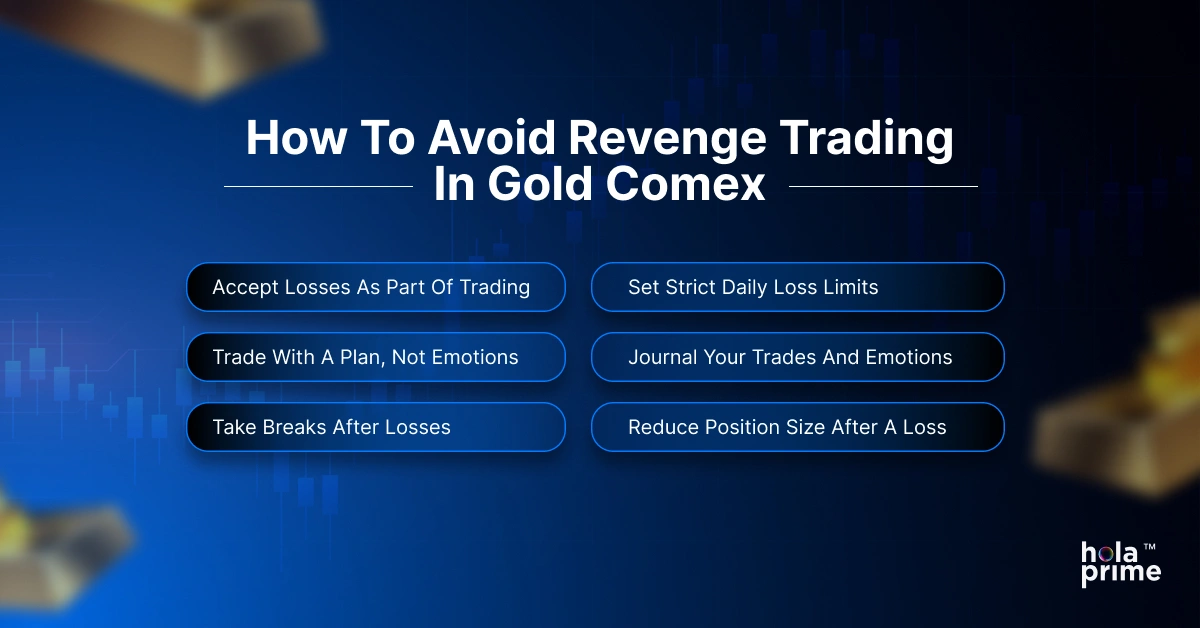
1. Accept Losses as Part of Trading
Even if you're a pro, you can't avoid losing sometimes. The quicker you come to terms with this, the less likely you are to make trades out of spite. Think of losses as just another business expense, similar to costs in other jobs. Take a shop owner, for instance. They have to pay rent each month regardless of whether they turn a profit. Trading is no different; losses are part of the deal.
2. Set Strict Daily Loss Limits
One of the simplest but most effective strategies is to set a maximum daily loss. If you lose more than this amount, stop trading for the day. This prevents emotions from taking over and gives you time to reset. For instance, you might decide that if you lose $300 in a day, you’ll shut down your platform and walk away. Sticking to this rule can save you from spirals.
3. Trade with a Plan, Not Emotions
Always have a written trading plan with predefined entry and exit rules. If your reason for entering a trade isn’t in the plan, you shouldn’t take it. For example, if your plan says you only trade gold when it breaks a certain support level with volume confirmation, then stick to that. Jumping in after a loss just because you “feel” the price will bounce back is not trading - it’s gambling.
4. Journal Your Trades and Emotions
Keeping a journal helps you spot trends in your actions. Jot down your entries and exits, and also how you felt before and after each trade. You might see that after two losses in a row, you tend to trade too much. Seeing this trend is the first step to making it right.
5. Take Breaks After Losses
If you’ve just taken a significant hit, the best thing you can do is step away. Go for a walk, exercise, or do something completely unrelated to trading. Gold will still be there tomorrow. Taking a break resets your emotions and prevents snap decisions.
6. Reduce Position Size After a Loss
Another smart tactic is to lower your risk after a loss. Instead of trying to recover quickly with bigger trades, scale down. This gives you room to think clearly without the pressure of a large position hanging over you. For instance, if you normally trade two contracts of gold, drop to one or even a micro contract after a bad day.
Building the Right Mindset for High-Volatility Contracts
Avoiding revenge trading is less about tactics and more about mindset. You need to approach gold contracts with patience and discipline. Understand that missing an opportunity is better than forcing a bad one. High-volatility instruments will always create more chances tomorrow, so there’s no need to act impulsively today.
A great way to start practicing this mindset is to think in terms of the long-term. Rather than fixating on winning every single trade, measure your performance in terms of weeks or months. When you think longer term, short-term losses become easier to accept. Remember, professionals don't win all of the time; they make money by managing risk and are consistent.
Example: A Trader in Gold Comex
Suppose there are two traders who encountered unexpected price movements in gold. Trader A lost $1,000 on a sudden move down. Trader A decided not to react but shut down the platform, reviewed why the situation took place, and came back the following day. Trader A later identified a clear setup and entered into the market with discipline and made back part of the loss without additional stress.
Trader B also lost $1,000 but immediately went back into trade with trader B doubling the position. The price moved against Trader B and in total lost $3,000. The two traders are not different in skill, but in mindset. One trader can stop, and Trader B falls into revenge trading.
Conclusion
One of the most prevalent traps in highly volatile markets, such as contracts for Gold Comex, is revenge trading. The quick pace and heightened volatility of price action can make a loss feel personal, but when you react out of emotion, you will only create worse losses to chase. By having limits in place, adhering to a trading plan, and instilling the proper mindset, you will be able to stave off the temptation to chase a loss and protect your capital. Consider trading a marathon, rather than a quick sprint. The successful trader can maintain their discipline amidst the inevitable discomfort of trading.

 EN
EN DE
DE