Prop trading has been around for years, but in 2026, it feels more relevant than ever. More traders are talking about it, trying it, and sticking with it long term. This shift is not happening by accident. It is driven by how markets have changed, how traders think today, and what most people actually need to survive in trading.
If you look closely, prop trading fits the reality of modern trading far better than traditional retail trading does.
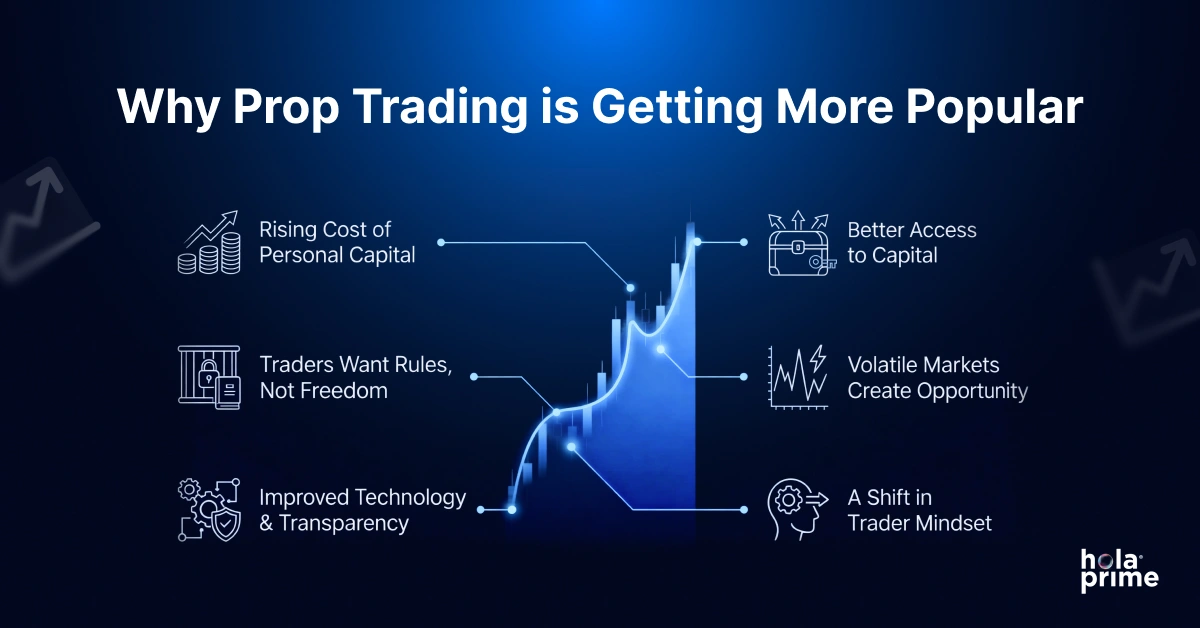
The Rising Cost of Trading With Personal Capital
One of the biggest reasons prop trading is growing is simple. Trading your own money has become expensive and stressful. Margin requirements are higher, volatility is sharper, and a few bad trades can wipe out months of savings.
Many traders in 2026 are not beginners. They already know how to trade. The problem is not skill, it is capital. Growing a small personal account takes time, patience, and repeated deposits. Prop trading removes that pressure by allowing traders to focus on performance instead of funding.
When traders know their downside is limited, they trade with a clearer head. That alone changes behavior in a big way.
Traders Want Rules, Not Freedom
This might sound strange, but many traders now prefer strict rules. After years of overtrading, revenge trading, and emotional mistakes, structure feels safer.
Prop firms offer defined loss limits, drawdown rules, and clear profit targets. These rules act like guardrails. They stop traders from blowing accounts during bad days and force consistency over time.
In 2026, more traders understand that freedom without discipline usually ends badly. Prop trading provides discipline by design.
Better Access to Capital Without Loans or Investors
In the past, traders who wanted to scale had limited options. They either needed investors, loans, or years of compounding small gains. None of those paths was easy.
Prop trading offers a cleaner solution. If you can trade well and manage risk, you earn access to larger capital. There is no need to convince investors or take financial debt.
This model attracts traders who want growth without financial pressure outside the market.
Improved Technology and Transparency
Another driver behind the growth of prop trading is better technology. Platforms are faster, dashboards are clearer, and performance metrics are easy to track.
Traders can see their stats daily. Win rate, drawdown, average risk, and consistency are all visible. This helps traders improve based on data, not emotions.
Modern prop firms also communicate rules more clearly than in the past. That transparency builds trust and long-term participation.
Volatile Markets Create Opportunity
Markets in 2026 are volatile across forex, indices, futures, and commodities. News moves prices fast. Sessions overlap. Liquidity shifts quickly.
Volatility creates opportunity, but only for traders who manage risk properly. Prop trading allows traders to participate in these moves without risking personal savings. That balance between opportunity and protection is very attractive.
Many traders prefer risking a challenge fee over risking their own account during unpredictable market conditions.
A Shift in Trader Mindset
The biggest trend behind prop trading growth is mindset. Traders today are more realistic. They care less about quick profits and more about staying in the game.
Prop trading rewards patience, discipline, and consistency. It punishes gambling. That aligns well with how serious traders want to operate in 2026.
Instead of asking how fast they can get rich, traders are asking how long they can survive. Prop trading answers that question better than most alternatives.
Why Prop Trading Fits 2026 Traders
In 2026, trading is not about shortcuts. It is about structure, risk control, and scalability. Prop trading combines all three in a way that fits modern market conditions.
As long as markets stay competitive and traders value capital protection, prop trading will continue to grow. Not because it is easy, but because it makes sense.
For many traders, prop trading is no longer a backup plan. It is the main plan.


 EN
EN DE
DE